
They were an absolute angel all day.
The teacher said so. The grandparents said so. The swimming instructor practically sent you a thank you note. And then they walked through your front door and slowly, beautifully, completely fell apart.
By the time the lights go off they are crying about a sock. Or the wrong cup. Or something that happened in 2024.
If you have ever stood in a darkened bedroom at 8pm thinking why is this happening to me right now, of all the hours, I need you to hear something. The reason your kid unloads at bedtime is not because they are being difficult. It is because you are the safest person they know.
That little detail changes everything about how the night feels.
In this post I am going to walk you through what is actually happening in your child’s body when the day ends, why all of it lands on you and nobody else, why the stalling is not really stalling, and what you can reach for when you have almost nothing left to give. 🌙
What Is Actually Happening When Your Kid Unloads At Bedtime
Picture a glass of water carried very carefully across a room all day.
Your kid woke up and started carrying that glass. They carried it through getting dressed when their brain was not ready. They carried it through a classroom full of rules, noise, and expectations. They carried it through lunch, through pickup, through the car, through dinner.
By bedtime that glass is full to the absolute brim. And the moment they feel safe, they set it down. All at once. On you.
This is not naughtiness. This is a nervous system that finally gets to exhale.
Children spend most of the day in environments that ask them to hold it together. To wait their turn. To sit still when their body wants to move. To manage feelings that are far too big for the size of the person holding them.
That holding takes enormous energy. It is the same exhausted feeling you get after a day of being on for everyone. The difference is that your kid does not have the words for it yet, so it comes out as tears over toothpaste.
If you want to understand the brain science underneath all of this, I wrote about it in why your kid goes from zero to screaming in about four seconds. It is the same engine running at the end of the day, just slower and sadder.
The unloading is not the problem. It is the release valve working exactly as designed.
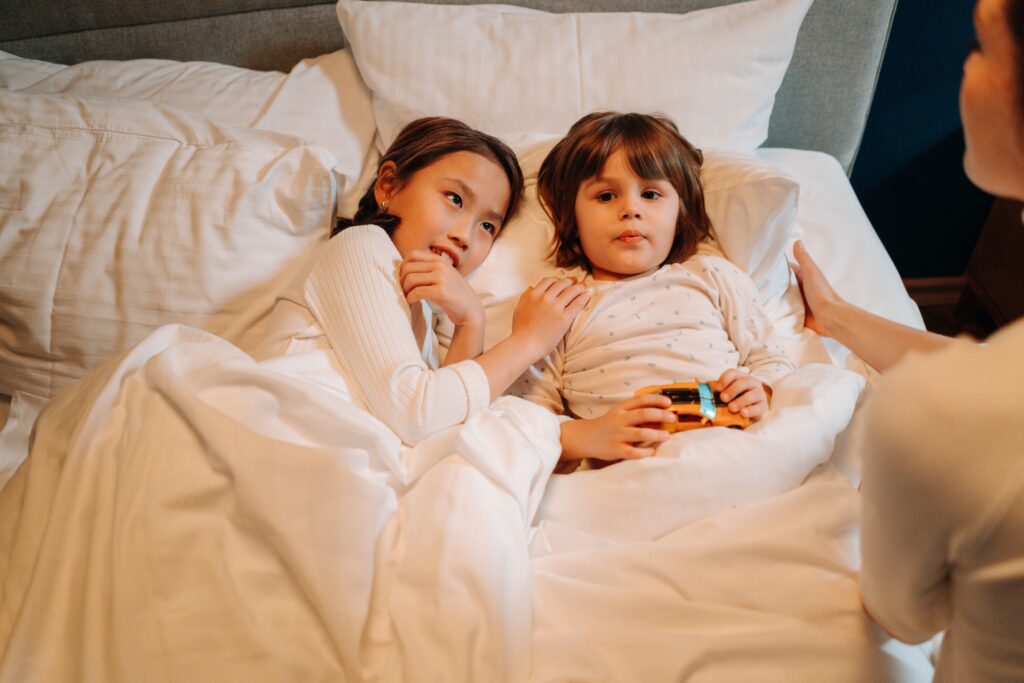
After School Restraint Collapse Is A Real Thing
There is an actual name for this and I wish someone had told me years ago.
It is called after school restraint collapse. It describes what happens when a child uses up all their self control in places where they have to perform, and then collapses the second they reach the one place they trust.
Your home is that place. You are that person.
Researchers and child psychologists talk about it as a sign of secure attachment, not a sign of bad behaviour. The child holds it together where it is not safe to fall apart, and falls apart where it finally is.
So when your sweet kid is praised everywhere except inside your own four walls, that is not a failure on your part. That is the whole system working.
I know it does not feel like a compliment at 8pm when you are being screamed at about the wrong pyjamas. It feels like a personal attack with a side of exhaustion.
But the restraint had to go somewhere. It could not stay bottled up forever. It came out where the love is unconditional, where they will not be sent away for being too much.
If your child is the kind who completely melts the moment they walk in from school, you might recognise yourself in how to handle big feelings after school when your kid is completely done. Bedtime is simply the second wave of the same tide.
The angel everyone else gets is real. So is the puddle you get. Both are your kid.
Why It All Lands On You And Nobody Else
Here is the part that stings a little.
It almost never happens with the other parent in quite the same way. It rarely happens with grandma. It does not happen at the childminder. It happens with you, the one who is already running on fumes by nightfall.
There is a reason for that, and it is not that you are doing something wrong.
You are the emotional home base. You are the person whose presence tells their body you can let go now, I have got you. That is a sacred job and an absolutely exhausting one.
Children unload with the parent who has proven, day after day, that the love does not get withdrawn when the feelings get ugly. You earned this. The unloading is your receipt.
I used to take it so personally. I would think, why does she save the worst of it for me? Then I understood that the worst of it is also the most honest of it.
The flip side is that being the safe place all day and all night leaves you completely emptied out. If you have ever felt like you cannot relax even after they are finally asleep, that is not a coincidence. I wrote about exactly that in why you can’t relax even when the kids are finally in bed.
You are the container. Containers need refilling too. We will get to that.
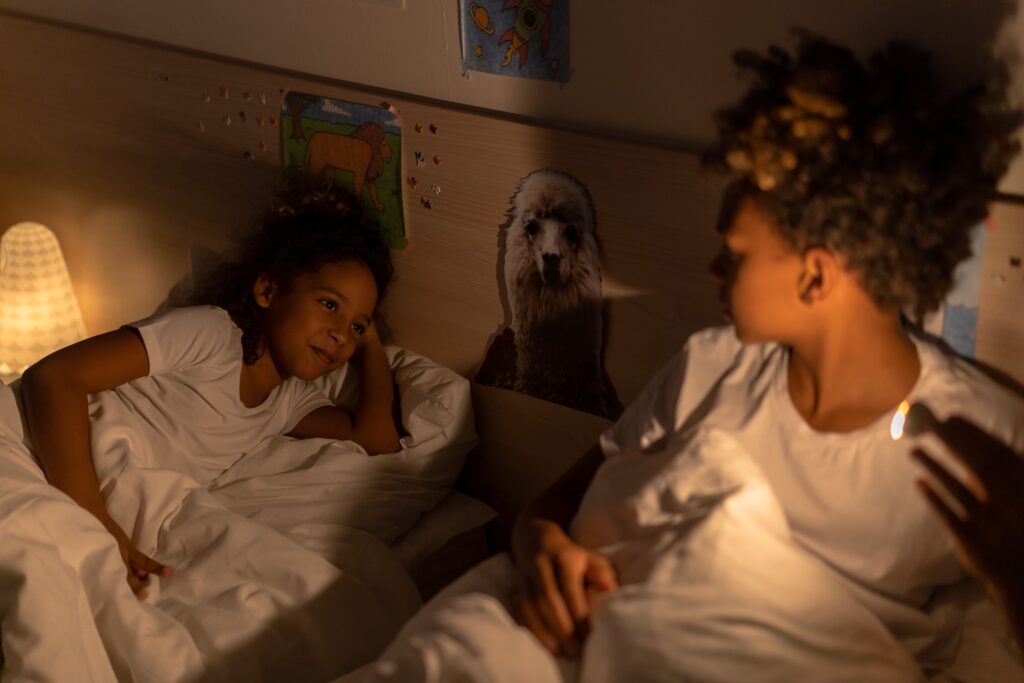
The Bedtime Stalling That Is Not Actually Stalling
One more drink. One more story. One more trip to the bathroom. A sudden burning question about whether sharks have tongues.
We call this stalling and we roll our eyes at it. Sometimes it genuinely is a clever delay tactic, because kids are tiny lawyers. But often it is something gentler hiding underneath.
The stalling is frequently a bid for more connection before the day closes.
Bedtime is separation. The lights go off, the door closes, and a small person is left alone with their thoughts and the full glass of water they have been carrying. Of course they reach for one more minute of you.
When my daughter was younger she would suddenly remember, right at lights out, the most important news of her entire life. A friend said a thing. She was worried about a test. She did not like the lunch.
I learned that those late confessions were not random. They were the things she did not have room to say while the day was still loud. The quiet finally made space for them.
If your child needs help feeling safe enough to say the real thing out loud, this one will help: helping your child feel safe to talk about their feelings.
So before you assume it is all manipulation, ask what the stalling might be protecting. Sometimes the sharks question really is about the sharks. Sometimes it is please do not leave me yet.
Your Calm Is The Container They Are Looking For
Here is the hard, unglamorous truth about bedtime unloading.
Your kid cannot settle until you do. Their nervous system is borrowing yours. When you are wound tight and snapping back, their body reads danger and turns the volume up, not down.
They are not waiting for the right words. They are waiting for your steadiness.
This is the science of co regulation, and it is the single most useful thing I have ever learned as a mom. A dysregulated child calms by leaning on a regulated adult. Not a perfect one. A regulated enough one.
I dug into the whole mechanism in your calm is their calm, and honestly it reframed every difficult bedtime I have ever had.
Now, I am not going to pretend I float into the bedroom like a candle scented goddess of serenity every night. Most nights I arrive frazzled, touched out, and silently begging the universe for the day to be over.
The goal is not to never lose it. The goal is to come back. If you reacted in a way you did not love at bedtime, that is human, and the repair matters more than the slip.
Before you try to talk your kid down with logic, this is worth a read: why talking it through never works in the middle of a meltdown. Spoiler. Their thinking brain has already left the building.
If catching yourself before the snap is the part you struggle with most, the free Snap Switch is a tiny three step method I keep in my back pocket for exactly these moments. It helps you interrupt the surge before it becomes a bedtime you have to apologise for.
What To Do When You Have Nothing Left At 8pm
Let me speak to the actual reality here, not the Pinterest version.
By bedtime you are not a fresh, rested human ready to gently coach a child through their feelings. You are a tired person who has been needed since 6am and would quite like to be left alone in a quiet room with a snack nobody asks for a bite of.
You do not have to be endlessly patient. You have to be present enough to keep the peace in the room.
That is a much lower, much kinder bar.
When you have nothing left, drop the talking. Sit on the edge of the bed. Put a warm hand on their back. Let your breathing slow down on purpose, because they will eventually match it.
You do not need a script. You need a body that says I am here and I am not panicking. Even when on the inside you are absolutely panicking about the dishes, the lunches, and tomorrow.
Lower the lights. Lower your voice. Lower your expectations of how gracefully this is going to go.
Some practical, child sized tools that genuinely help at this hour live in calming techniques for kids. Keep a couple of them in your pocket for the nights the unload arrives early.
And if you snapped tonight, you are not broken. You are depleted. Those are very different things.
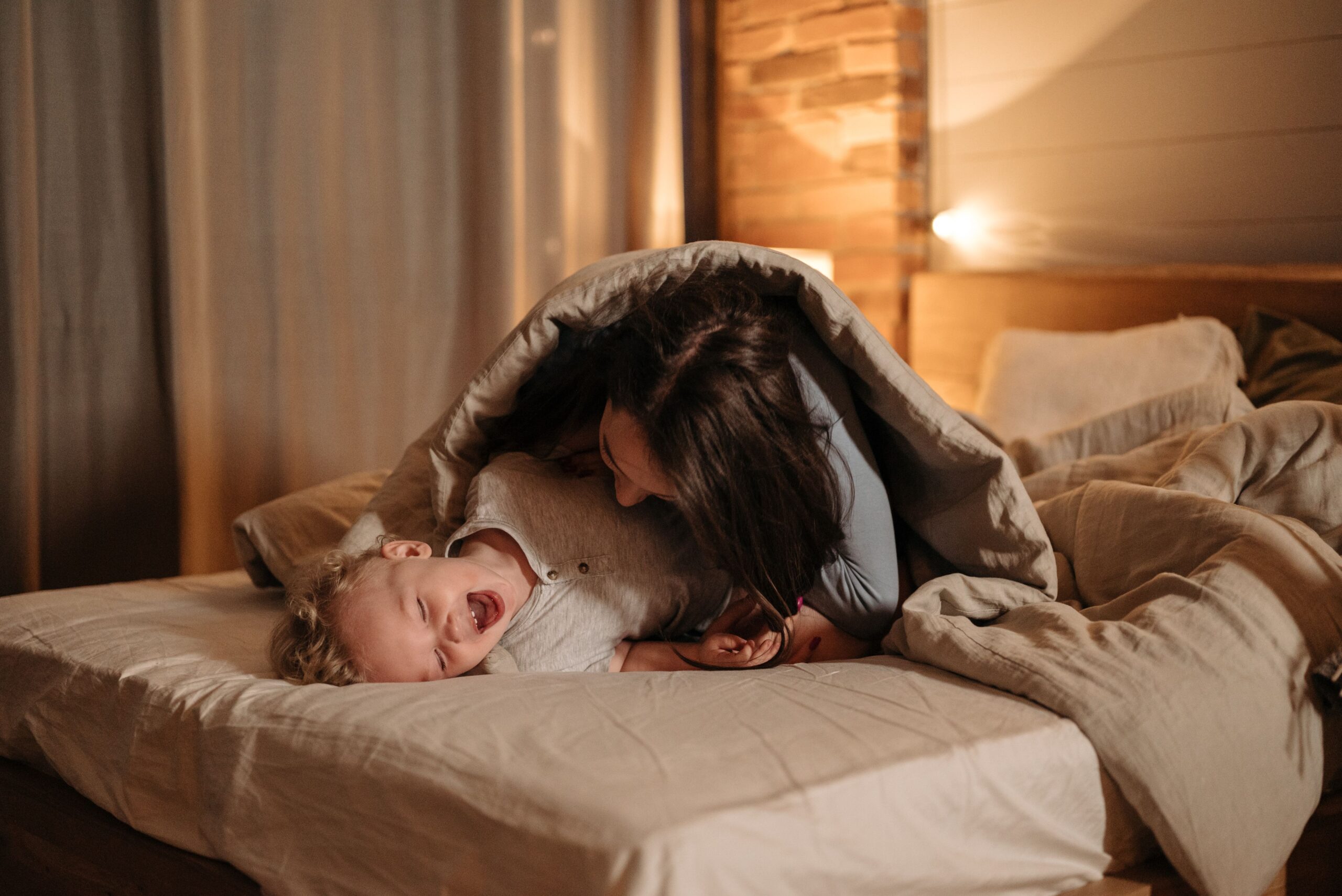
Small Ways To Catch The Unload Before The Lights Go Off
You cannot stop the unloading completely, and you would not want to. But you can give the full glass a few earlier places to spill so it does not all crash at lights out.
The trick is connection before the day gets quiet, not instead of bedtime but woven in before it.
Try these, lightly, with zero pressure to do them perfectly:
- Ten unhurried minutes after school or after dinner where you are not asking anything of them, just near them
- A short wind down that is the same most nights so their body knows what is coming
- One small ritual that belongs only to the two of you, a silly handshake, a song, a single shared joke
- Naming the feeling out loud before they have to explode it, you held a lot together today, huh
Predictable closeness drains the glass slowly instead of all at once.
I built a few of these into our nights almost by accident, and they softened bedtime more than any clever discipline trick ever did. You can find more of them in small daily moments that help kids feel safe and connected.
None of this makes bedtime perfect. My daughter can still find a reason to weep about a hairbrush at 8:15. But it makes the storm smaller and shorter, and on a tired Tuesday, smaller and shorter is a genuine win.
When The Unloading Is About Something Bigger
Most nights the unload is just the ordinary overflow of a full day. Sometimes, though, the same bedtime tears are pointing at something heavier underneath.
A new baby. A move. A hard friendship. A change they cannot control.
For three years my oldest daughter has cried at the door every other weekend before she leaves for her dad. It does not come out in the car or at school. It comes out at home, with me, where it is safe to fall apart.
I cannot fix the thing she is sad about. I have made my peace with letting her go anyway, with her face like that, because she deserves a dad and she deserves her grief.
What I can do is be the steady place where the feelings are allowed to land. That is the whole job some nights. Not solving. Just holding.
If your child’s bedtime distress feels bigger than tired, look at what the day, or the season, or the change might be asking them to carry. Their anger and their tears are messages, not misbehaviour, something I unpack in what your child’s anger is actually trying to tell you.
You do not have to decode all of it tonight. You just have to stay in the room.
Bringing It All Home
So here is what I want you to carry up the stairs tonight.
The kid who saves their messiest, loudest, most tearful self for you is not rejecting you. They are trusting you with the parts they could not show anyone else all day. The unload is love turned inside out.
It does not feel like a gift at 8pm. It feels like a test you did not study for. But it is proof that you built a place safe enough for the truth to come out.
You will not get every bedtime right. I certainly do not. The point was never to be the perfectly calm mom. The point is to be the one who keeps coming back to the edge of the bed.
If you want a simple way to catch yourself before bedtime tips you over, the free Snap Switch is where I would start. Small tool, big difference, especially at the hour when you have the least left.
Tomorrow they will be an angel for everyone else again. And the puddle will still be yours. Lucky, lucky you. 💛