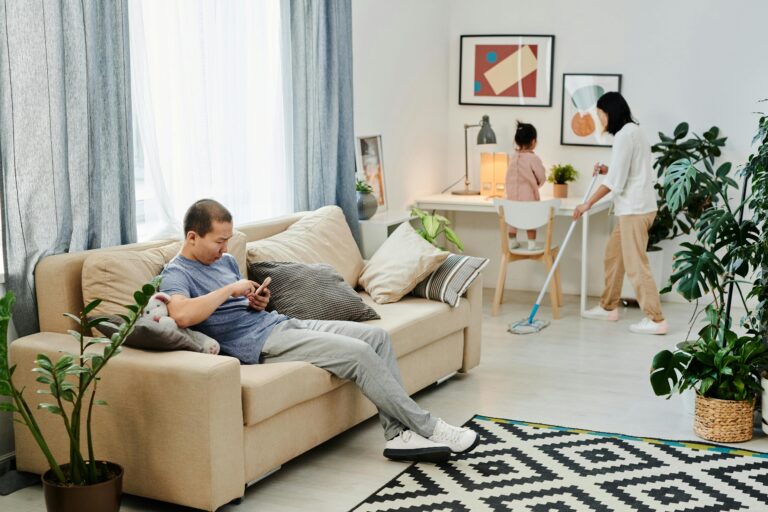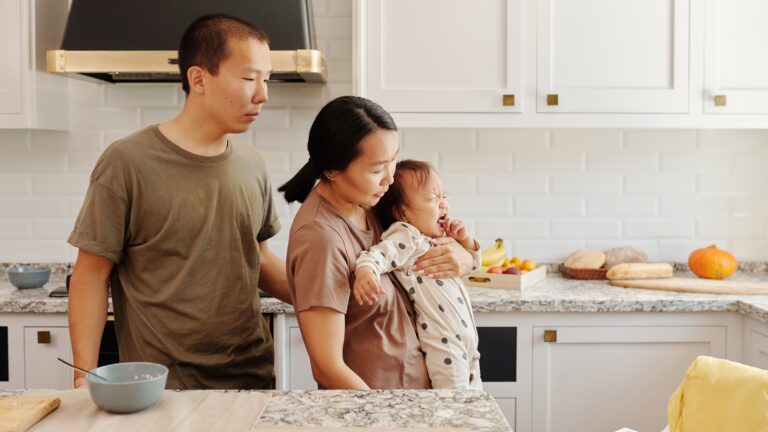
For about five minutes in 2020, everyone could finally see it.
The mental load. The invisible juggling. The thing you had been doing alone, quietly, behind every meal and school form and doctor appointment for years.
Suddenly the whole world was home. And the whole world got to watch.
They saw the scheduling. The planning. The anticipating. The “who needs what when” thinking that never stopped even when you closed your eyes at night. The pandemic mental load was suddenly right there in the living room with everyone else. Impossible to ignore. Briefly impossible to pretend was not happening.
And then lockdown ended. Schools reopened. Life went back to something resembling normal.
And everyone acted like it was over.
Except it wasn’t. Not for you. Because the mental load didn’t disappear when the restrictions lifted. It compounded. And you are still carrying the weight of it now, wondering why you cannot seem to close the gap between the tired you are and the fine you are supposed to be.
This post is about why that happened, why your recovery keeps stalling, and what you can actually do about the invisible load you are still dragging around years later.
For One Brief Moment, Everyone Could See What You Were Carrying
For years I tried to explain the mental load to people and watched their eyes glaze over.
It was not that they were bad people. They had just never had to see it. The lists, the planning, the anticipating, the managing. None of it had faces or timestamps. It was just there. Done by someone. Me.
Then 2020 happened.
Suddenly every partner who had been going to the office and coming home to dinner ready and homework done and kids bathed got to be home for all of it. They saw the schedule negotiating. The snack logistics. The “we are running out of pasta and also paracetamol and also sanity” thinking that happens at 7am before anyone else is awake.
Some of them were stunned. Some of them started helping more. For a while.
The pandemic made the invisible load briefly, undeniably visible. Researchers wrote papers about it. Journalists wrote articles about it. Partners made TikToks about it. For a moment, the invisible labour of motherhood had a name and an audience.
That moment mattered. Because being seen after years of not being seen does something to a person. Even temporarily.
But that moment was not long enough to undo years of carrying it alone. The brief visibility did not translate into permanent change for most households. It just meant everyone knew it was happening and then decided someone else would figure it out.
Spoiler: that someone was still you.
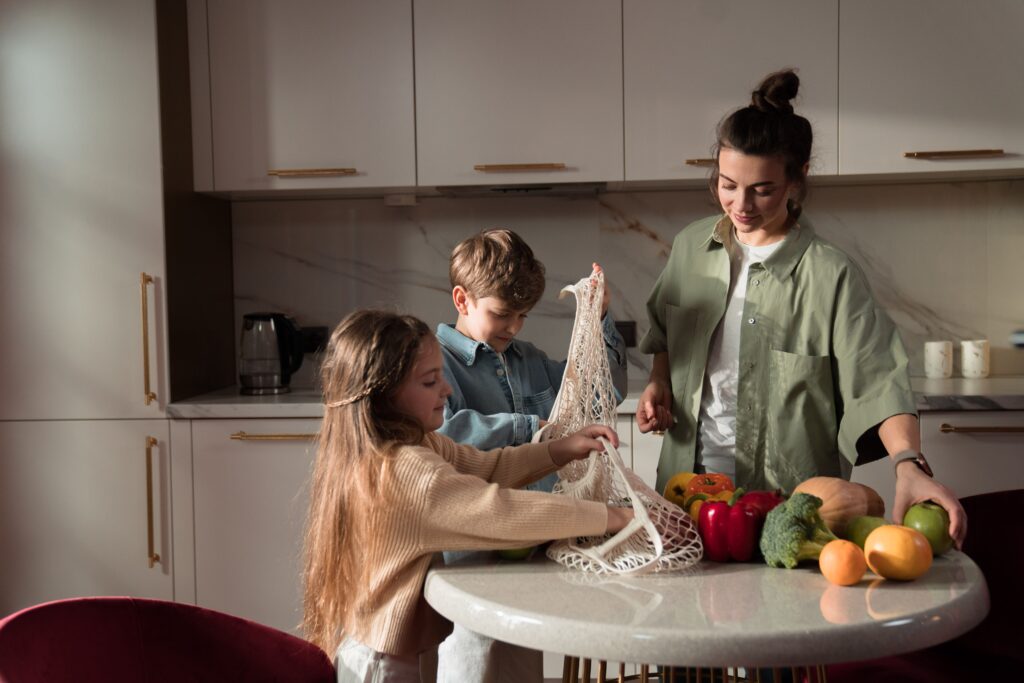
What Changed During Lockdown And What Stayed Exactly The Same
When the schools closed, the mental load did not split evenly.
Research published during and after lockdowns showed that women took on the majority of additional childcare, homeschooling, and emotional management even in households where both partners worked from home. This was not anecdotal. It was measured. It was documented. And then it was largely set aside once schools reopened.
What changed during lockdown: we were all physically in the same place.
What stayed the same: the thinking was still mine.
The schoolwork schedules, the entertainment rotation, the emotional temperature of the house, knowing whose feelings were about to boil over before they did. That did not redistribute. It just got louder.
The pandemic did not create the invisible mental labour. It amplified it and then lit it under a spotlight for five minutes before everyone looked away.
I do not say this to blame anyone. Patterns that have existed for decades do not dissolve in a global emergency. If anything, a crisis tends to reinforce the default divisions because there is no bandwidth for negotiating new ones. You just do what you have always done.
Which means you did more.
And then you tried to recover when normal came back. Except there was no normal to return to. The version of you that existed before 2020 was already running on empty. You never had the margin the rest of the world assumed you did.
Why The World Moving On Felt Like A Personal Betrayal
When restrictions lifted, something strange happened.
The conversations about pandemic mental load and invisible labour quietly dissolved. The think pieces stopped. The partners who had been home and witnessed everything went back to the office. Kids went back to school. And everyone seemed to exhale.
Except you.
Because the problem had not been that the world did not know. The problem was that once they knew, nothing actually changed. The chore split did not reorganise. The school admin did not redistribute. The emotional management of the whole household did not suddenly become shared equally.
You had been seen. Briefly. And then everyone went back to not seeing.
I find this the loneliest version of the mental load. Not the original version where nobody knew it was happening. The version where they saw it, acknowledged it in a Facebook post, and then decided you would handle it again.
The exhaustion from that is different. It has a specific flavour. The flavour of grief, almost. Because there was a window, and the window closed.
If you want to understand more about why this particular load keeps going unnoticed even when people theoretically know about it, this piece on why you are carrying 71 percent of the mental load and nobody even notices gets into the research in a way that will make you feel both vindicated and very tired. In a useful way.
The Pandemic Mental Load Lives In Your Body Not Just Your Brain
Here is something nobody tells you about sustained stress: your nervous system does not have a calendar.
It does not receive the announcement that restrictions have lifted and things are returning to normal. It responds to patterns. And if the pattern for two years was high alert, managing everything, bracing for the next disruption, the next school closure, the next crisis… your body stayed in that posture.
This is why so many moms who looked objectively fine in 2022 and 2023 were actually still fundamentally depleted.
The body keeps a record. The nervous system that spent months in a hypervigilant state does not gently unfold when the external pressure eases. It stays ready. It waits for the next thing. It has learned that the next thing always comes.
I noticed this in myself in small ways that did not make sense on the surface. I would hear a notification sound and my shoulders would shoot up to my ears. I would get to a quiet evening and instead of resting, I would start planning the next emergency. Not because anything was wrong. Because my system had learned that quiet meant “use this time to prepare.”
That is not laziness. That is not weakness. That is a nervous system doing its job. The job it was trained to do during a sustained crisis.
You cannot think your way out of this. You cannot decide to relax. The body processes this at a different level entirely. And the invisible load of motherhood goes deeper than to-do lists and scheduling. It lives in the body. And the pandemic years made it heavier and then left you to carry the excess weight alone.
The Garbage App Moment (And Why It Was Never About The Bins)
I have to tell you about the bins.
In the Netherlands, rubbish collection is a whole thing. There is an app. Different categories. Different schedules. A notification the night before. For years, I was always the one who saw the notification, processed what it meant, and told my boyfriend which bin to take out.
One evening I completely fell apart over it.
Not because of the bins. Because I realised that bin notification was the ten thousandth invisible thing I had absorbed quietly and processed silently and managed smoothly while nobody noticed I was doing it. And I was doing it after a pandemic where I had absorbed more, processed more, and managed more than ever before, while simultaneously watching the world decide it was over and expecting me to reset.
The bins were not the problem. Years of quiet yesses were.
The pandemic did not create those yesses. But it added several dozen more to a pile that was already taller than I could carry. And then it ended without anyone taking anything off the pile.
The world moved on. The pile stayed.
If you are reading this and nodding at a very specific kind of tired, the Cut, See, Unload Kit is a free resource I made for exactly this feeling. It helps you start naming what is actually on your pile, see what you have been absorbing invisibly, and begin unloading it without a fight or a spreadsheet. It is short. It is practical. It does not require anyone else to cooperate. Start there.
Why Your Pandemic Mental Load Recovery Keeps Stalling
If you have been trying to get back to yourself since 2021 and it keeps not working, I want to offer you this:
You are not recovering slowly because you are doing it wrong. You are recovering slowly because the thing you are recovering from has not actually stopped.
The pandemic mental load was not a temporary spike. For most moms, it was an addition to an already unsustainable baseline.
Every system or strategy that works when you are ordinarily tired tends to fall apart when you are actually depleted in this way. You try to rest and you cannot switch off. You try to do less and the thinking still goes. You try to ask for help and the asking itself becomes another task.
This is not a character flaw. It is a capacity problem. Your emotional and physical reserves are genuinely lower than they were before 2020, and no amount of hot baths or early nights is going to address the actual gap if the underlying load has not changed.
Recovery from this level of depletion requires something different. It requires naming what is still on your plate. It requires actually reducing the load, not just resting from it temporarily. And it requires doing this slowly, without guilt, without blowing up your whole life.
The post on what mom burnout recovery actually looks like is worth reading if you are at this stage. Because real recovery looks different from what the wellness world sells you. And knowing what to actually expect makes the whole thing more survivable.
What To Do With The Weight You Are Still Carrying
I am not going to tell you to practise gratitude. I am not going to suggest a morning routine.
What I am going to tell you is this:
The first step is naming it. Not fixing it. Not redistributing it. Not having a big conversation about it at the kitchen table while everyone is still eating. Just naming it. Writing it down. Seeing the full list of what you are carrying so that it stops living as a vague, formless weight in your body and starts existing as an actual inventory.
The invisible load stays invisible even from yourself when you never stop moving long enough to see it.
Most moms who do this exercise are genuinely shocked by what is on the list. Not because they did not know they were busy. But because writing it out makes it undeniable in a way that moving through it on autopilot never does.
Once it is named, some things on the list you can put down. Some things you can share. Some things you will discover you have been carrying out of habit rather than necessity. And some things are genuinely yours and will stay yours. But knowing the difference matters.
The Cut, See, Unload Kit walks you through exactly this process. It is free. It is practical. It does not require your partner to agree to anything or show up in any particular way. It just helps you see what you are carrying and start putting some of it down. Sometimes that is exactly the right place to start.
You Were Never Supposed To Bounce Back To That
The pandemic mental load conversation was always incomplete.
Everyone focused on the visibility of it. On the fact that people could finally see what had always been there. On the brief, bright moment when the invisible labour of motherhood was undeniable.
Nobody followed up on what happens when visibility ends and the load does not.
You were never supposed to bounce back to a baseline that was already breaking you. That was never a sustainable place to return to. And the exhaustion you feel now is not a failure of resilience. It is evidence that you have been honest enough to stop pretending the pile is manageable when it is not.
That honesty is not weakness. It is the beginning of something.
The world went back to normal. You are allowed to go somewhere better. 💛

Wendy Venema
A late-realized AuDHD mom in a blended family of seven. I write the posts I needed when I was crying on the bathroom floor.
Read my story