The second shift mom checks locks, lunchboxes and tomorrow’s calendar after the doors close. Here is why that work counts and how to put it down.
Last updated: 12 October 2026
After the last door clicks shut you check the locks, the lunchboxes and tomorrow’s calendar in your head, and nobody ever clocked you in for it. I call it the 8:40 PM walk through. It is a lap around the house and a lap around the week, and you do both at once. 🌙
If that is you, you are a second shift mom, and the numbers say you are in very large company. In a July 2026 Ipsos survey for GreenShield of 1,001 Canadian mothers, 92% said they feel responsible for keeping track of most family tasks.
I want to show you what the walk through really is, where the name comes from, and how to stop doing it alone every single night.
What does a second shift mom actually do at 8:40 PM?
A second shift mom does the unpaid thinking work of the household after everyone else has stopped. She checks that the doors are locked, that the lunchboxes are ready, that the permission slip is signed and that tomorrow does not hold a surprise.
Nobody sees any of it. There is no sound, no mess and no finished pile. It happens in your head while you stand in a dark kitchen holding a cold cup of tea.
I have caught myself doing the walk through in my socks, in the dark, with one hand on the light switch and a full list of tomorrow running behind my eyes. If you filmed me, it would look like nothing at all. It would also be the hardest part of my day.
The sneaky part is that it looks like standing around. Your partner sees you pause by the fridge and assumes you are resting. You are actually running a small airport. 😅
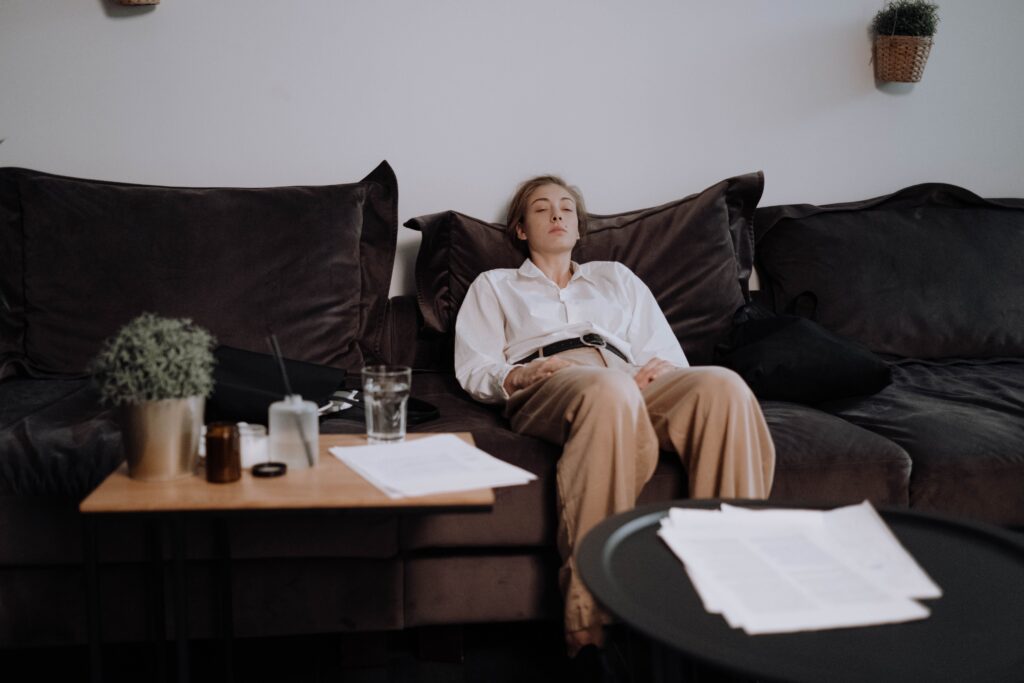
Where does the term second shift come from?
The phrase comes from sociologist Arlie Russell Hochschild, who named it in her 1989 book The Second Shift. A sociologist is a researcher who studies how groups of people live and work together, and Hochschild studied couples where both partners had paid jobs. She found that women still did most of the housework and childcare once the paid day ended, which is the shift she meant. You can find the book here.
Here is what I find strange. That book is over thirty years old, and the shift she described has quietly grown a second layer that is not physical at all.
Back then the second shift was mostly dishes and bath time. Today it also includes the remembering, the planning and the quiet worrying, which is what researchers call the mental load, meaning the invisible work of keeping a household running in your head.
What is the difference between the first shift, the second shift and the walk through?
The walk through is the third layer: the thinking that sits on top of the work you can see. It is the part nobody counts, because it never shows up as an action.
Here is how I see the three layers now.
The first shift is paid work, school runs and commuting. Everyone notices it.
The second shift is dinner, dishes, baths and laundry. Mostly the people eating off the plates notice it.
The walk through is locks, lunchboxes, the calendar and who needs what by Friday. Almost nobody notices it, and that is the whole problem.
A lot of couples only argue about the middle row. Then one person wonders why they are still exhausted when the dishes are split fifty fifty.
The answer is the bottom row. You can share every chore and still carry the whole list alone, which I explain more in the invisible load of motherhood and why your partner does not see it.

How much of the mental load do moms really carry?
Most of it, and the 2026 Ipsos numbers are hard to argue with. The survey ran from 2 to 8 July 2026 for the health benefits company GreenShield, and Ipsos is a major independent research firm. Among Canadian mothers with children under 18, 75% said they are primarily responsible for scheduling and planning, and 74% said the same about remembering important dates or tasks.
Another 71% are primarily responsible for coordinating school tasks, and 86% said they feel “always on” when it comes to family responsibilities. Always on is a pretty good description of 8:40 PM.
One more number made me laugh and then stop laughing. 68% said their mental load is higher in back to school season, which is exactly the season where you are wrestling lunchboxes and calendars at this hour.
If you want to see how far this goes, I wrote about why you are carrying 71 percent of the mental load and nobody even notices.
Why did a garbage app make me fall apart?
Because the bin was never the problem, the notification was. Here in the Netherlands trash is collected weekly in three categories, and paper follows a different schedule every two weeks. There is an app that pings you the night before.
I was always the one who saw the ping, processed it and told my boyfriend which bin to take out. Every time. One evening I completely fell apart over it, and it was not about the bin. 🫠
It was about every invisible yes I had been absorbing quietly for years while nobody noticed. He would have taken the bin out happily. He just never once saw the notification, because I had trained the whole house to run on my brain.
That evening taught me something I did not expect. Being the one who notices is a job, even when the doing is shared. It is the same trap I describe in you became the default parent and nobody held a vote.

Why does asking for help make the walk through longer?
Because when you delegate a task but keep the noticing, you gain a second job: manager. You still have to remember that it needs doing, tell someone, check it was done and fix it when it was not.
Most of us have heard the sentence “just tell me what to do.” It sounds generous. It quietly hands you a promotion you never wanted, which I unpack in why just tell me what to do is not help.
The walk through is the same story at bedtime. The lunchboxes can be packed by someone else, but unless they also own the thinking about lunchboxes, you will still do your lap at 8:40 PM. 💛
And the worrying counts too. I wrote about why the worrying counts as mental load and never gets to clock off, because the lap around the house never ends with the last lock.
Even the rest you are supposedly allowed afterwards gets eaten up. There is a reason you cannot relax even when the kids are finally in bed, and it is not a lack of discipline.
How do you put the second shift down tonight?
Write the walk through out of your head and onto paper, then decide what truly belongs to you. Your brain keeps the loop open because it does not trust that anything is stored anywhere else. Give it a place and it can finally let go.
This is exactly why I made the Cut, See, Unload Kit, which is a free kit for getting the invisible list out of your head so you can look at it properly. It is made for the mom standing in the dark kitchen at 8:40 PM, not for a mom with a free Sunday.
Here is the simple version you can try tonight.
- Write it all down. Every item from your 8:40 PM lap through the house goes on paper. The lunchboxes, the back door, tomorrow’s form, the laundry still in the dryer.
- Circle what is truly yours. Only the things that need you, or that you want to keep. It is usually a lot fewer than your brain claims.
- Hand one thing over. Pick one item that is not circled and give it away, with a clear owner and a date.
Step three is where most of us flinch. We worry it will be done wrong, we worry about sounding ungrateful, and we worry the whole thing will turn into a fight at 9 PM on a school night.
Try it small first. A single lunchbox, a single bin, a single form, with a clear owner and a date, tells you far more than a big speech ever will.
If you need words for it, here is the conversation to have with your partner when you cannot carry it alone anymore.

FAQ
What is a second shift mom?
A second shift mom is a mother who keeps working, in body or in mind, after her paid day and the visible chores are over. The term comes from Arlie Russell Hochschild’s 1989 book The Second Shift. I use it for both the physical tasks and the invisible thinking that goes with them.
Is the second shift the same as the mental load?
They overlap, but they are not the same. The second shift usually means the unpaid housework and childcare after work, while the mental load is the planning, remembering and worrying behind it. In my own house I felt the mental load long before I could name it.
Why do I feel tired when my partner and I split the chores evenly?
Because splitting the doing does not split the noticing. In the Ipsos survey for GreenShield, 75% of Canadian mothers said they were primarily responsible for scheduling and planning. If you still hold the list, you still work the shift.
How do I stop the 8:40 PM walk through?
Start by getting the list out of your head and giving one whole task away, including the remembering. I would not try to fix everything at once. One handed over lunchbox routine did more for me than any app.
So what do I do with all of this?
You are not bad at relaxing, you are working an unpaid shift that nobody wrote down. The locks, the lunchboxes and tomorrow’s calendar are real work, and Hochschild put a name on that kind of work back in 1989. The Ipsos numbers from 2026 show it has not gone anywhere.
Take it out of your head tonight with the Cut, See, Unload Kit, and let one other person hold a whole item, noticing included. I told you the garbage app story because I know how small the trigger can look next to what is really underneath.
You have been clocked in all day, and tonight you are allowed to clock out. 💛

Wendy Venema
A late-realized AuDHD mom in a blended family of seven. I write the posts I needed when I was crying on the bathroom floor.
Read my story