
You do not need a themed picnic. You do not need to schedule quality time. You do not need a Pinterest board of bonding activities.
What your kids actually need are the small daily moments that help them feel safe and connected. The tiny ones you probably think do not count. The thirty seconds at the stove. The two minutes at the back door. The look across the kitchen when something goes wrong.
Those are the moments they are storing. Not the trip to the zoo.
I know this because I have been that mom who planned the perfect family weekend, executed it beautifully, and still had a daughter who told me on Monday night she felt a bit lonely that week. Connection does not work the way we think it works. It is not about size. It is about frequency. 💛
This post is going to walk you through exactly which small daily moments actually build connection with kids, why they work so much better than big efforts, and how to weave them into your already overflowing days without adding a single thing to your plate.
Connection Is Not A Scheduled Event. It Is A Rhythm.
Here is what I wish someone had told me in my first year of parenting.
Connection is not something you schedule. Connection is something that happens in the cracks.
It happens in the thirty seconds between brushing teeth and turning out the light. It happens in the one minute when you hand her the milk and accidentally catch her eye. It happens when you pass her in the hallway and squeeze her shoulder for no reason.
The small daily moments that help kids feel safe and connected are not the ones you plan. They are the ones you notice.
This is actually great news for tired moms. It means you do not need more time. You do not need more energy. You do not need to schedule a weekly one on one activity with each kid. You just need to pay a tiny bit of attention to the moments that are already happening in your regular day.
A scheduled hour at the park with phones away is lovely. But four ten second moments of real eye contact spread across one ordinary Tuesday will do more for your relationship with your child than any planned outing. Your calm presence is doing more than you think it is on those ordinary days.

Why Small Moments Beat Big Gestures Every Time
There is actual research behind this, but I am going to tell you the mom version.
Kids do not store memories the way we think they do. They are not keeping a mental tally of expensive days out versus regular Wednesdays. What they are storing is a feeling about you. A sense of whether you are available. A sense of whether you see them.
Big gestures spike that feeling once and then fade. Small daily moments keep the feeling topped up on a constant drip.
Think about it from their side for a second. If your partner brought you flowers once every six months but rolled their eyes at you across the kitchen every other day, you would not feel loved. You would feel confused and slightly unsafe. But if your partner never brought flowers and instead put a hand on your back every time they walked past you while you were cooking? You would feel loved. Deeply. All the way in.
Kids are the same. They are not keeping score of big moments. They are tracking the tone of the daily ones.
This is also why guilt is such a terrible motivator for parenting. Booking one big special day to make up for a bad week does not undo the bad week. But a hundred small repair moments the following week actually can. The repair is in the regular, not the remarkable. And if you want to understand what your child’s anger is really telling you underneath the surface, that post makes the repair feel a lot less like failure.
The 30 Second Morning Moment That Changes The Whole Day
I want to give you specific moments, not just concepts, because concepts do not survive Monday morning.
Here is one that changed everything for me.
When my youngest daughter comes downstairs in the morning, before I say anything about breakfast or school or teeth, I stop whatever I am doing. I put my body where she can see me. I say her name. I look at her face for maybe three seconds. I say good morning, I am so glad to see you.
That is the whole thing. Thirty seconds at most.
The first week I did it, I felt absurd. Like I was performing a parenting move from a book. By the second week, she started running at me in the mornings. By the third week, she started doing it back. She would walk into the kitchen and say good morning mama, I am glad to see you today.
That is what felt safety sounds like coming out of a small child’s mouth.
The reason this works is nervous system stuff, not magic. When the first input of the morning is a warm face that is happy to see her, her whole day calibrates around that. School stress lands softer. Transitions go smoother. The bedtime meltdown is smaller because the morning filled her up first.
You can do this with kids of any age. A teenager will pretend they hate it and still count on it. A toddler will climb into it. Thirty seconds. Before the day begins. Your face, genuinely glad to see their face. That is it.

What Happens At The Kitchen Counter Matters More Than You Think
The kitchen counter is a holy place in a family. I am not even being cute. The counter is where most of the tiny daily connection moments happen, and most of us are missing them because we are stirring something.
Kids come to the counter to talk. That is where they tell you the thing that happened at lunch. Where they float the question they are not sure how to ask. Where they stand a little too close while you chop carrots.
Most of us respond to these moments in mom autopilot. Yeah. Mhm. Go set the table. Our body stays turned toward the stove. Our brain stays on dinner.
Here is the small shift that changes it. Put the knife down for five seconds. Turn your body. Look at her. Then go back to the carrots.
You do not have to stop cooking. You do not have to turn off the burner. You just have to give her five seconds where your whole body says I heard that, and you are more important than the carrots right now.
Five seconds. Multiple times a night. Over years.
That is the building block of a kid who feels safe enough to still be talking to you at fourteen. And I know, because I have seen my oldest daughter open up about the hardest things in her life at the counter while I was mid sentence with dinner. She came to the counter because the counter is where we talk. That was built over a thousand five second moments I did not even notice at the time.
Bedtime Is When Their Walls Come Down
Bedtime is the golden hour. This is not my opinion. This is biology.
Kids get emotionally softer when they are tired. The walls they put up during the day to survive school and siblings come down as they get sleepy. Whatever they have been holding in all day quietly surfaces right when you are trying to get them to brush their teeth.
Most of us rush through bedtime because we are exhausted and we just want them asleep. I get it. I have been that mom sprinting through the bedtime routine with one eye on the clock and both hands doing something else.
But bedtime is where the real stuff lives. If you are going to pick one part of the day to be fully present, pick this one.
It does not have to be long. Five minutes of sitting on the edge of the bed with the lights already off. One hand on their back. No agenda. No questions. Just your body in the room, available.
That is when they will tell you the thing. Not always. But when they do, it will be here.
I have had my daughter tell me things in the dark that she would never have said in the kitchen. The dark gives them cover. Your quiet body gives them permission. That five minutes at the end of a hard day is where a huge amount of the actual parenting gets done, and all it requires is that you sit down and stop talking. Helping your child feel safe enough to open up explains exactly why these quiet moments work so well.
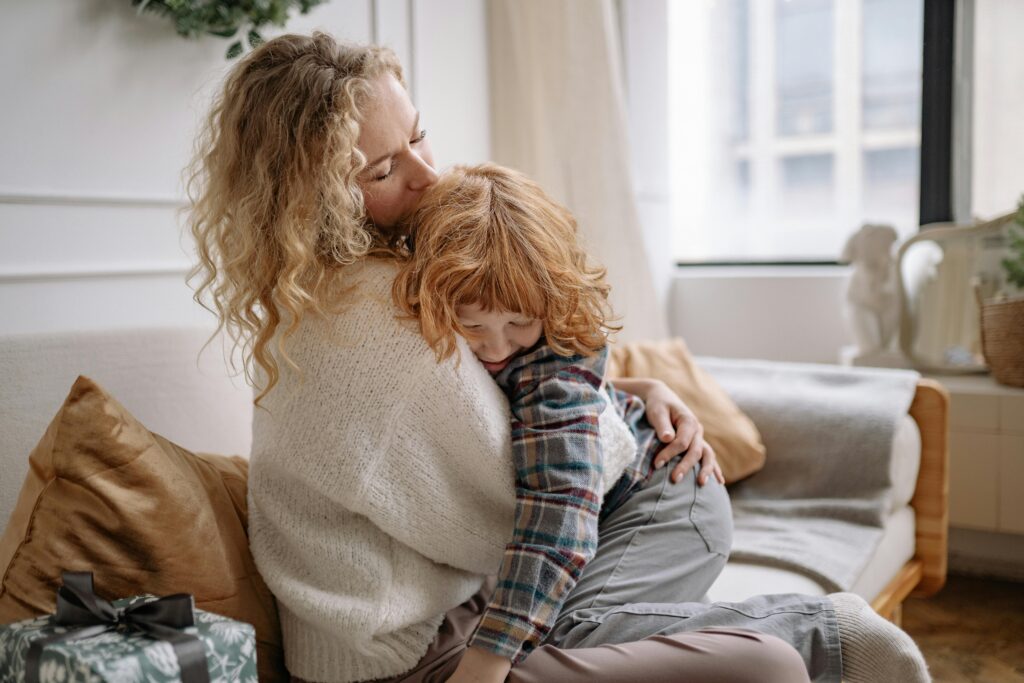
The Moments You Think Do Not Count Are The Ones They Remember
This is the part that still gets me.
Ask any adult about their favourite memory of their mom and I promise you, it will not be the birthday party. It will be something strange. The way she hummed while folding laundry. The specific way she rubbed their back. The one time she let them eat cereal for dinner. The smell of her car. The particular cadence of her goodnight.
None of that was planned. None of it was remarkable. None of it was the thing anyone would have predicted.
The small daily moments you do not even register are the ones becoming their core memories of you.
I think about this every time I catch myself feeling like I am not doing enough. Like we should be making a bigger deal of ordinary Tuesdays. And then I remember that the way I say her name when I am pouring her cereal is already the memory. The way I wave from the front window when she leaves for school is already the memory. The fact that I always check if she is cold at night and pull the blanket up a little higher. Already the memory.
You are already making the memories. You are just not watching yourself do it.
When You Cannot Give Presence, Give Predictability
Here is the thing nobody tells you. On the days when you simply do not have presence to give, predictability is just as powerful.
Some days you are fried. Burned out. Touched out. Past empty. You cannot conjure up warm eye contact and soft bedtime conversations. That is real life and it does not make you a bad mom.
On those days, predictability carries the connection for you.
The same goodnight phrase, even when you are exhausted. The same morning routine, even when you are barely functional. The same Friday pizza. The same Sunday pancakes. The same walk to school. The same song in the car. The same little joke about the neighbour’s cat.
Your kid does not need you to be emotionally available at full capacity every single day. Your kid needs to know that certain things are always true. That Friday is pizza. That mama always kisses their forehead at the door. That there is a specific mug that is their morning mug. That the rhythm of the home holds them even when the mother in it is a bit quiet.
Predictability is connection in its lowest maintenance form. It still counts.
This is why keeping small rituals alive during a hard season matters so much. The rituals do the heavy lifting while you recover.
The Real Goal: Felt Safety, Not Perfect Parenting
If you remember one thing from this post, let it be this.
The goal of all these small daily moments is not to raise perfect kids. It is not to build strong bonds for their future relationships. It is not to score well on some invisible parenting report card.
The goal is felt safety.
You are trying to build a child who knows, in their body, that home is safe. That you are reachable. That when something goes wrong in the world, there is a soft place they can come back to. That is what felt safety means. It is knowing in your bones that you have a home base.
You cannot build that with one big vacation. You build it one thirty second moment at a time, over years. The good morning. The hand squeeze. The five seconds at the counter. The I love you no matter what in the dark.
If you want more of these small rituals laid out in one gentle place, The Everyday Magic Playbook is the free little guide I put together for exactly this. It is a collection of the tiny daily rituals that actually build connection without adding anything to your plate. The opposite of a mom to do list. A soft landing place for moms who want the magic without the pressure.
Conclusion
Your kids are not waiting for a bigger gesture. They are waiting for you to look up when they walk into the room.
The small daily moments that help kids feel safe and connected are the ones happening right now, in the exact life you already have, with the exact energy you already have. The morning hello. The five seconds at the counter. The bedtime sit down. The predictable rhythm of a regular Tuesday. None of it looks impressive from the outside. All of it is the foundation.
You are already doing so much of this without knowing it. Let yourself feel that for a second. The home you are building is already holding them.
You do not need to be a better mom. You need to believe that the small things already count. Because they do. They always have. 💛