


Thanksgiving Boundaries for Moms: How to Protect Your Peace
Moms keep asking the same thing every November: “Why does Thanksgiving feel like a pressure cooker when it’s supposed to feel cozy?” Honestly, I’ve wondered that myself while juggling a half-burned pie, a toddler meltdown, and an aunt who insists the mashed potatoes need “just a little more effort.” The emotional load creeps in early, and before you even notice it, your nervous system is already buzzing from the noise, the planning, and everyone’s expectations about how the day should look.
For years, I thought the stress was just part of the deal. You know, the unofficial “mom tax” of the holiday season. But the more I paid attention to my own overwhelm, the more I realized the real problem wasn’t the cooking or the hosting. It was the silent assumption that moms can stretch endlessly. Spoiler: we can’t. And honestly, we shouldn’t try.
I learned the hard way that without Thanksgiving boundaries for moms, the day can turn into a blur of burnout. There was one year I said yes to three different desserts, two drop-ins, and hosting both sides of the family. By 4 p.m., I had disappeared into the bathroom just to breathe for thirty seconds. It wasn’t a proud moment, but it taught me something important about capacity and emotional boundaries.
If you’ve ever felt that same tight-chest feeling or wished you could tap out just for a minute, you’re in the right place. This guide grew out of those messy moments. I’ll share the small changes that made a huge impact, like how to communicate limits gently, how to manage sensory overload, and how to protect your energy without starting a family argument.
Let’s make this year calmer than the last. One boundary at a time.
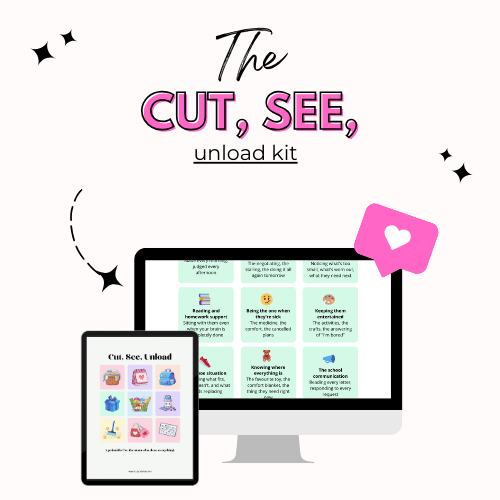
You Do It All. And Nobody Even Notices.
You’re exhausted but you can’t explain why. This free kit finally gives you the answer.
Why Moms Need Thanksgiving Boundaries
It’s wild how many moms quietly wonder, “Why does this holiday feel heavier for me than everyone else?” The invisible workload is a real thing, even if nobody talks about it. You’re mentally tracking oven timers, seating plans, emotional tension between relatives, and that one kid who always needs the bathroom right as the food hits the table. None of that shows up on a to-do list, yet it drains you faster than any side dish ever could.
The emotional labor is what really sneaks up on you. I used to think I could handle it all, but the truth is the constant noise, the decision fatigue, and the pressure to create a perfect Thanksgiving hits different when you’re already stretched thin. One year I noticed I had not sat down for more than five minutes until dessert. My whole body felt like it was buzzing from sensory overload, and that was the moment I realized the holiday had stopped feeling like a holiday.
Unchecked expectations build resentment faster than undercooked turkey. When everyone assumes you’ll manage the kids, the kitchen, the clean up, and the mood of the whole day, you end up carrying more weight than anyone notices. I’ve felt that quiet frustration simmer under the surface, and if you let it sit there, it turns into burnout that lasts for weeks.
Boundaries are not about shutting people out. They are about keeping yourself steady so the whole family stays steady with you. A simple limit like “I am not cooking every dish this year” or “I need a quiet break after lunch” shifts the whole tone of the day. Kids behave better when you’re regulated, adults follow your lead, and the atmosphere becomes softer for everyone.
Thanksgiving feels a lot more peaceful when you’re not carrying the entire holiday on your back. Boundaries make that possible.
Common Holiday Stress Triggers for Moms
A lot of moms tell me they feel trapped by holiday expectations, and honestly, I get it. Overcommitting is usually the first domino to fall. I’ve said yes to hosting, cooking three sides, and driving an hour to pick up a relative, all before realizing I hadn’t left a single minute for myself. It always sounds doable in the moment, but by midday my energy is running on fumes and everyone still needs something from me.
Then there are the traditions. Families cling to them like superglue. I used to feel guilty if I didn’t follow the exact routine: the same dishes, the same timeline, the same everything. One year I tried to switch breakfast to something simple so I wouldn’t start the day stressed. You would’ve thought I announced that Thanksgiving had been canceled. These expectations pile up, and moms end up carrying the weight of keeping everyone happy without a break.
Noise is a whole other beast. Holidays are loud in a way that hits differently when your nervous system is already tired. Kids running, timers beeping, people talking over one another, music in the background. There’s a point where the noise stops being “holiday cheer” and starts feeling like sensory overload. I’ve stepped outside just to hear myself think.
Lack of downtime makes it worse. Moms get stuck in constant motion, bouncing from one task to the next. No chance to sit, breathe, or eat without being interrupted. And when last minute changes hit, like someone arriving early or deciding they don’t like the menu, the whole routine gets thrown off. That’s usually when stress spikes.
Knowing these triggers helps you set better Thanksgiving boundaries so the day doesn’t take over your whole body and mind.

How to Identify Your Thanksgiving Capacity
Most moms don’t actually ask themselves how much they can handle on Thanksgiving. We just power through, hoping our emotional battery magically grows as the day gets busier. It never does. Capacity is real, and when you ignore it, the stress shows up in little ways first. Snapping at someone over something tiny. Forgetting what you were doing mid-task. Feeling that tightness in your chest before anyone even arrives.
One simple way to check your emotional and time capacity is to map out the entire day on paper. I literally draw a timeline and mark what I’m responsible for. When the whole thing is squeezed from morning to night with no breathing room, that’s my red flag. It’s surprisingly easy to see where you’re overloaded once it’s all in front of you.
A few questions help too:
- Who is expecting something from me this year?
- What tasks drain me the fastest?
- What parts of the day actually make me feel good?
- Where do I need help, even if I don’t want to admit it?
Choosing what matters most is the next step. I used to insist that everything mattered: homemade pies, the perfect table, keeping every tradition alive. Turns out only two or three things genuinely bring me joy. The rest is just pressure passed down like an heirloom no one asked for. Letting go of the unnecessary parts makes room for calm.
The trick is catching overwhelm early. My signs show up quietly at first: I start doing everything faster, my breathing gets shallow, or I stop drinking water because I’m “too busy.” When those habits creep in, I know I’ve crossed my Thanksgiving capacity line.
Knowing your limits helps you protect your energy before the day runs you over.
Practical Thanksgiving Boundaries Every Mom Should Consider
The hardest part about setting boundaries on Thanksgiving is admitting you actually need them. Moms get trained to be “flexible,” which usually means bending until you snap. Time boundaries are often the easiest place to start. I finally began telling family what time we’d arrive and what time we’d leave, and honestly it saved me. I even build in a break after lunch so I can step outside or sit alone for ten minutes. No one notices, but my nervous system does.
Task boundaries make a huge difference too. One year I cooked almost the entire menu myself because I didn’t want to inconvenience anyone. Big mistake. Now I split things into three categories: what I enjoy doing, what I’ll do if needed, and what I refuse to take on. Childcare gets divided ahead of time so I’m not automatically the default parent all day. If you don’t do this early, you’ll end up multitasking until your brain turns to mush.
Emotional boundaries are trickier, but worth it. There are a few topics I won’t discuss at the table anymore, and I give myself permission to redirect or excuse myself if someone pushes them. It’s not rude. It’s self protection. Holiday conversations can get heavy fast, and moms usually get sucked into emotional labor without even noticing.
Sensory boundaries matter more than people think. Thanksgiving is a sensory storm. I keep a quiet space available, whether it’s a bedroom or even my car. I also limit background noise and make a “rest pocket” somewhere in the day so I’m not running nonstop. It helps keep everyone calmer, including the kids.
Technology boundaries help too. Phones and tablets are great until they’re not. I set simple rules like no loud videos during meals and a shared break where everyone disconnects for a bit. It keeps the day more connected and less chaotic.
These boundaries aren’t strict. They’re scaffolding that holds you up before things get overwhelming.
Scripts for Saying No Without Guilt
A lot of moms tell me the boundary part isn’t the problem. It’s the saying it out loud without feeling like the villain. I’ve been there, especially with hosting requests. One year I agreed to host even though I already felt stretched thin, and by the time everyone left, I was so drained I cried in the kitchen. After that, I started practicing kinder, firmer declines. It feels awkward at first, but it gets easier.
Here are a few ways to say no to hosting without sounding harsh:
- “I love you all, but hosting isn’t something I can take on this year. Let’s plan something simple instead.”
- “My plate’s really full right now, so I need to sit this one out. Happy to bring a dish though.”
Extra dishes and errands are another trap. People assume moms can “just add one more thing,” even when you’re already running on fumes. These quick lines saved me more than once:
- “I can’t take on another dish, but I’m excited to try what you bring.”
- “My schedule is packed that morning, so I won’t be able to make that run.”
Stressful conversations sneak up fast during the holidays. If someone brings up drama, politics, or anything that puts your emotional load into overdrive, try gentle redirects:
- “Let’s save that for another time. I want today to stay light.”
- “I hear you, but I’m keeping things calm today. Tell me about something fun instead.”
And unwanted opinions? Those always show up. Parenting, cooking, how you’re managing… all of it. Low conflict responses help you dodge the emotional labor without inviting an argument:
- “That’s an interesting perspective.”
- “I’m doing what works for us today.”
- “Thanks, but I’ve got it handled.”
If you want easy scripts to practice, here are a few you can literally copy and paste:
- “I’m not available for that, but I hope it goes well.”
- “That’s not something I can take on, so let’s find another solution.”
- “I need to step away for a few minutes to reset.”
Saying no isn’t rude. It’s how you protect your peace so you can actually enjoy Thanksgiving instead of surviving it.

How to Communicate Boundaries with Family
Most moms worry less about having boundaries and more about how their family will react to them. I used to overthink the timing so much that I’d end up saying nothing until the day of, which always made things messier. It turns out the best timing is earlier than you think, when everyone’s still calm and no one is knee-deep in stuffing. A gentle tone helps too. I aim for clear but soft, kind of like how you’d talk when you’re trying not to wake a sleeping child but still need them to actually hear you.
Explaining limits without over-explaining is tougher than it sounds. I used to ramble, giving five reasons and three apologies for a single “I can’t.” It always made me sound unsure, which opened the door for people to try and negotiate. Now I keep it simple. One sentence stating the limit, one sentence giving the general reason, and then I stop talking. People adjust faster when they don’t sense wiggle room.
Visual or written plans can save you from arguing later. One Thanksgiving I typed up who was bringing what, arrival times, and a loose schedule for the day. Nothing strict, just enough structure to prevent the usual chaos. It seemed silly, but everyone thanked me because they knew what to expect. Less confusion means fewer last-minute demands on you.
Kids need prep too. They do better when they know the plan, especially during overstimulating holidays. I walk mine through what the day will look like, where the quiet space is, and what behavior I expect. It doesn’t solve everything, but it reduces public meltdowns by half.
Pushback will come. There’s always someone who thinks boundaries are “dramatic” or unnecessary. When that happens, I breathe, keep my voice steady, and repeat the boundary once. If they keep pushing, I usually say, “I’m not discussing this further,” and move on. Staying calm throws off the people who want you to match their energy.
Communicating boundaries isn’t about controlling others. It’s about making sure you don’t lose yourself somewhere between the turkey and the tension.
Creating a Low-Stress Thanksgiving Plan
A low stress Thanksgiving doesn’t magically appear. I learned that after one year when I made a full seven dish menu just because “that’s what we always do.” By the time the turkey hit the table, I was so frazzled I barely tasted anything. Simplifying the menu became my first real act of self preservation. Now I pick three things I love making and let the rest go. No one has ever complained that there weren’t enough sides, and honestly, the food tastes better when I’m not half dizzy from stress.
Divide and share cooking tasks early. I used to think asking for help was a sign I couldn’t handle the holiday. That idea nearly broke me. Now I assign dishes the same way I would assign jobs on a group project. Someone brings rolls, someone handles dessert, someone grabs drinks. It cuts the oven traffic in half and keeps me from waking up at 5 a.m. in a panic.
Intentional downtime is a lifesaver. I literally schedule it, or else the whole day becomes a marathon. It can be ten minutes outside, a cup of coffee alone, or a quiet room break. Without it, my energy tanks by mid afternoon.
Creating sensory friendly rhythms is another tool I wish I had used sooner. Thanksgiving is a loud holiday. I keep music soft, lighting warm, and give the kids a calm corner with books or fidget toys. It keeps the overall mood steadier and prevents the kind of overstimulation that spirals into chaos.
Early prep is the secret weapon. A few things that make a huge difference:
- Chop veggies the night before
- Set the table early
- Prep casseroles ahead of time
- Make a written plan for oven timing
Doing even two of these keeps the morning from exploding into chaos.
A low stress Thanksgiving isn’t perfect. It’s intentional. And it’s so much better that way.
What to Do When Your Boundaries Are Challenged
Every mom knows this moment: you set a perfectly reasonable Thanksgiving boundary, and someone pushes back like you’ve just cancelled the entire holiday. It used to send my stress level through the roof. Staying calm during pushback is a skill I had to learn the hard way. When someone challenges me now, I pause before answering. Literally one full breath. It keeps me from jumping into old habits of over explaining or giving in because it’s easier in the moment.
When my nervous system spikes, I lean on quick reset strategies. Nothing fancy. Sometimes I excuse myself to refill my water, even if the glass is full. Other times I run cold water over my hands in the bathroom. Those tiny resets interrupt the stress cycle before it snowballs into snapping at someone or shutting down completely. It’s not graceful, but it works.
Knowing when to walk away and when to stay is tricky. I stay if the conversation is uncomfortable but manageable. I walk away if someone is trying to override my boundary or drag me into emotional labor I didn’t agree to. My go to line is simple: “I’m stepping away for a minute, we can revisit this later if needed.” Most people don’t follow you when you say it calmly.
Kids learn boundaries by watching you hold yours. I used to apologize every time I took a break, and guess what? My kids started doing the same. Now I say things like, “I need quiet time so my body can calm down,” or “I’m not available for that question right now.” They pick it up fast because they see me model it, even when it’s imperfect.
The guilt is real though. Holiday guilt hits harder than weekday guilt, and it took me years to reframe it. I remind myself that protecting my energy isn’t selfish. It’s how I stay the mom I want to be instead of the overwhelmed version who shows up when I push past my limits. Once I started seeing boundaries as care for everyone, not just myself, the pressure softened.
Holding boundaries isn’t about winning. It’s about staying steady when the holiday storm hits.

Gentle Self-Care That Fits into a Busy Thanksgiving Day
Moms tell me all the time that self care feels impossible on Thanksgiving because the whole day runs on everyone else’s needs. I’ve felt that too, especially the years when I didn’t sit down until the dishes were stacked to the ceiling. But tiny, micro recovery moments can fit into even the busiest holiday if you know what to look for. I’m talking 20 to 40 seconds at a time. That’s it. Those little pauses keep you from sliding into full blown overload.
One of my go to tools is a quick breath reset. I’ll stand at the counter, pretend I’m checking the timer, and do one slow inhale through my nose, then a longer exhale through my mouth. If I do three rounds, my shoulders drop almost instantly. Grounding exercises help too. Sometimes I press my feet into the floor and name five things I can hear. It sounds silly, but it works when the sensory overload starts creeping in.
I’ve started preparing “nervous system buffers” before the day even begins. A buffer is just something that softens the impact of stress. For me, that looks like eating breakfast early so my blood sugar isn’t a mess, or keeping a bottle of cold water nearby to sip when the kitchen gets chaotic. Tiny things, but they keep me steadier.
Small rituals also help me reset during the day. I light a candle before everyone arrives. I make my coffee in my favorite mug. I step outside for a minute after the meal, even if it’s cold. Those rituals feel like little anchors when everything gets loud and unpredictable.
Tiny self care adds up because it keeps your nervous system from crashing. You don’t need an hour to yourself. You just need a few strategic moments that remind your body you’re safe, grounded, and allowed to breathe.
Conclusion
Thanksgiving boundaries for moms aren’t about being difficult, and honestly, I wish someone had told me that years ago. They’re about protecting the parts of you that get worn down first, like your patience, your energy, and the tiny corner of calm you try so hard to keep intact. When you set even one small limit, the whole day shifts. You stop running on emergency mode, and you actually get to be present with the people you love instead of just managing them.
I’ve had holidays where I powered through without boundaries, and by the time dessert rolled out, I felt like I’d lived three full days in one afternoon. The resentment lingered longer than the leftovers. But the years I honored my real capacity? Everything felt softer. Conversations were warmer, the house felt less chaotic, and I didn’t end the night feeling like I needed a week to recover.
Clear boundaries, delivered kindly, make this happen. And you don’t have to overhaul your entire Thanksgiving. Sometimes all it takes is:
- Leaving at the time you said you would
- Asking someone else to bring the dessert
- Taking a ten minute reset after lunch
- Saying no to a topic that drains you
These tiny choices protect your nervous system more than you’d think.
Your well being matters, even on days that are supposed to be “for everyone.” Start with one boundary this year, something small and doable, and watch how different the holiday feels. You deserve a Thanksgiving that doesn’t empty you out. You deserve one that lets you breathe.