
Your kid is screaming because of the wrong cup. Or the sock seam. Or because you breathed in their general direction.
You know this feeling.
The moment a regular Tuesday tips over and your child becomes a small storm in pyjamas.
Here is the thing nobody tells you in the parenting books. What your child’s anger is trying to tell you is almost never the thing they are yelling about. It is not the cup. It is not the sock. It is not even you.
The cup is the doorway. The anger is the message. Once you know what the message actually is, you stop fighting the cup and start hearing the kid.
I am the mom of an eleven year old daughter who has been telling me things through her anger for years. Some of it I heard right away. Some of it took me embarrassingly long.
In this post I am going to walk you through what your child’s anger is really telling you, why they save their biggest feelings for you, and what they actually need from you when the storm hits.
Coffee in hand? Good. Let’s go. 💛

Make Everyday Motherhood Feel Lighter and More Connected
The Everyday Magic Playbook gives you simple, actionable ways to bring calm, warmth, and emotional steadiness into your home without adding more to your plate.Anger Is Not The Problem Your Child Is Showing You
Anger is rarely the actual problem. It is the visible part of an iceberg you cannot see from the kitchen counter.
Your child is yelling about screen time. Underneath that, they are tired. Underneath that, they are hungry. Underneath that, they had a hard moment at school they have not figured out how to tell you about yet.
By the time you see anger you are already three layers deep into something else.
Here is what hides underneath a child's anger most of the time:
- A nervous system that has been holding too much for too long
- A feeling they do not have words for yet
- A sense that something is not fair and nobody noticed
- Hunger or tiredness pretending to be a personality
- A worry they have been carrying alone
When my daughter is yelling at her younger sister about a hairbrush, I have learned to ask myself a quieter question. Not what is happening. What happened before this.
Nine times out of ten, there was a hard goodbye that morning. A friend who said something that stung. A test she did not tell me she was nervous about.
The hairbrush is the iceberg tip. Everything else is underneath.
Your job is not to argue with the tip. Your job is to know there is more.
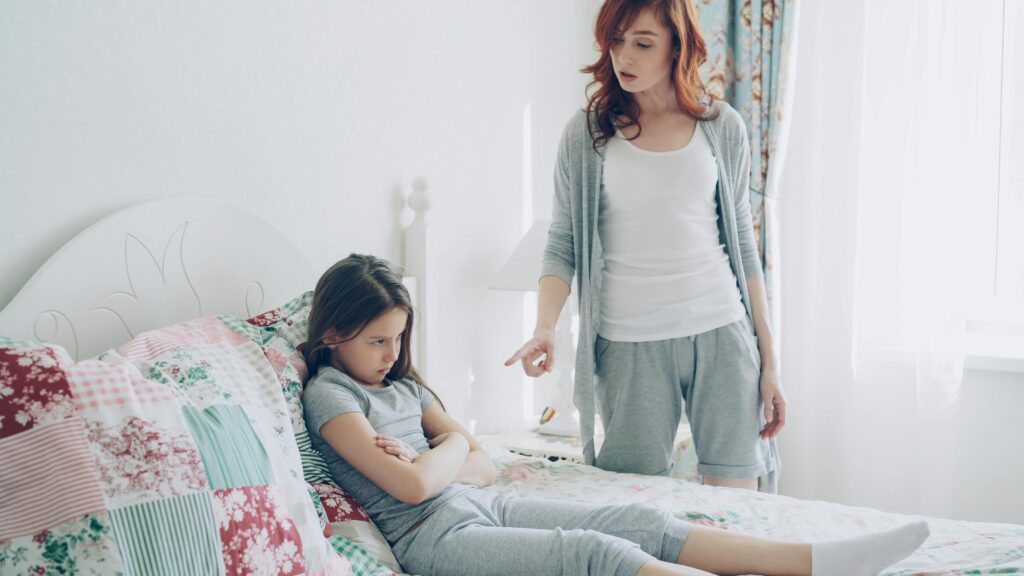
What Your Child's Anger Is Actually Trying To Tell You
If you could put a translator on a child mid meltdown, you would hear about five things again and again.
I do not feel safe in my body right now. Their nervous system is overloaded. Their brain is offline. The yelling is the only language they have left.
Something is too much and I do not know how to say it. They might be hungry, tired, overstimulated, or holding a feeling that is too big for their vocabulary.
I need you, but I do not know how to ask in a way you will hear. This one is the gut punch. Sometimes the angriest thing they say is the loudest version of please notice me.
I am scared and I do not know I am scared. Children often experience fear as anger, especially when they do not have a sense of control over what is happening.
I trust you enough to fall apart in front of you. This one looks the worst from the outside and is actually the best news in the chapter.
I know. That last one is not what you wanted to hear when they just slammed the door. But it is true.
When my daughter was seven, she screamed at me for forty minutes one night about a sock. It was not the sock. It was the fact that her dad was picking her up the next morning and she did not know how to say she did not want to go.
The sock was the safest place to put it.
Why Your Child Saves Their Biggest Anger For You
Here is the thing that will either ruin your day or save your week. You are the safest person in your child's whole world. That is why they fall apart in front of you.
At school, they hold it together. At Grandma's, they hold it together. With the babysitter, they hold it together.
Then they walk through the front door and detonate.
This is not because you are bad at parenting. It is because you are the place where they can finally let go.
Children are like little pressure cookers. They build up feelings all day. Most of them do not have the language or the regulation to release things in real time. They store it.
By the time they get home, the lid is rattling.
You happen to be the safest pair of hands in the room when the lid finally comes off.
That is a privilege. It is also exhausting.
There is a phrase psychologists use for this. They call it the safe container. You are the container. Your child is the storm. The storm trusts the container enough to actually let go.
I know this does not make the screaming any quieter at six o'clock on a Tuesday. But it might shift something in your chest the next time it happens.
You are not doing it wrong. You are doing it right. Even when the right thing sounds like a banshee in slippers.
What Your Child Needs From You In The Middle Of The Storm
This is the part where most parenting advice lets you down. They tell you to stay calm. They do not tell you what to actually do with your face and your hands when your kid is shrieking.
Here is the truth. You do not need to fix anything. You do not need to find the right words. You do not need a calm and gentle script you read out of a book.
You need to be the calm body in the room.
What your child needs from you in the storm:
- A body that is not panicking
- Eyes that are not punishing
- A voice that is low and slow even when theirs is loud and fast
- Permission to feel without permission to hurt
- Distance if they need it, closeness if they want it, your call to read which
That last one matters. Some children need you to come closer. Some need you to back up.
You learn which yours is by paying attention, not by following a rule.
When my daughter rages, she needs me to be in the same room but not on her face. If I sit on the floor near her, not looking, just there, she will eventually crawl toward me.
If I crouch down and try to talk, she goes nuclear.
Your child has a code. Crack the code, and the storm gets shorter.
This is what people mean by co regulation. Your nervous system shows their nervous system how to come back.
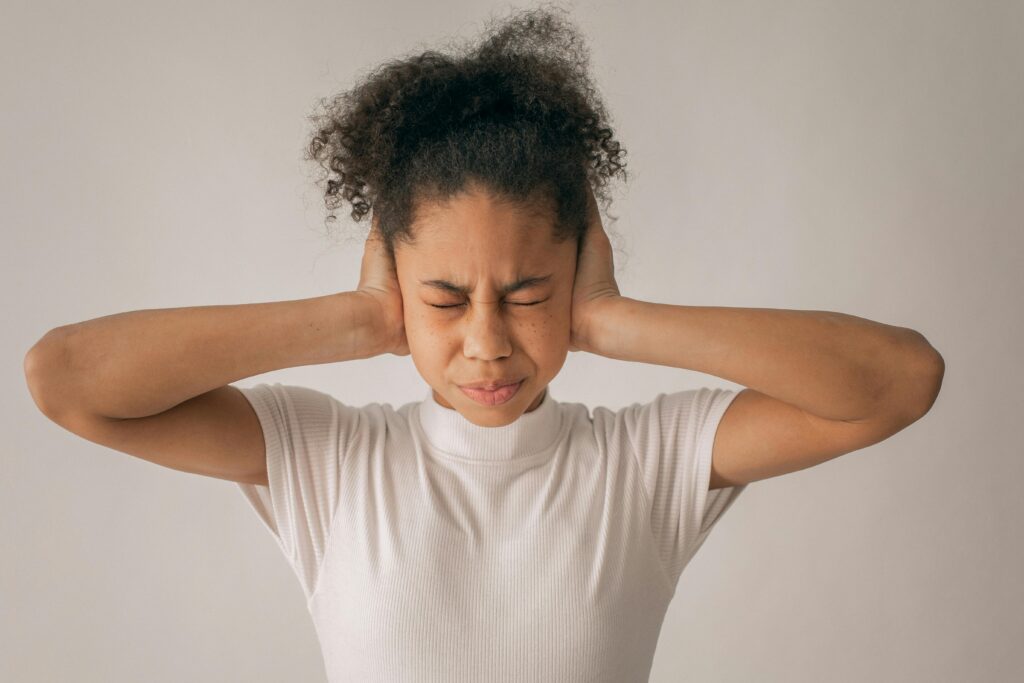
What Not To Do When Your Child Is Angry (Even Though It Feels Right)
Here are the things that make perfect sense in your head and make everything worse on the ground.
Do not match their volume. I know. Everything in you wants to. Your voice rises. Theirs rises. Now you are in a screaming match with a five year old and nobody is winning.
Do not punish a feeling. Sending a child to their room for being angry teaches them that anger is unacceptable. They learn to hide it, not to handle it. They will bring it back to you in worse shapes later.
Do not try to logic them out of it. The thinking part of their brain is offline. You are talking to a body in panic mode. Talking will not work. Presence will.
Do not lecture in the moment. The lesson lands later, when the storm has passed and the body is calm. Lecturing during the storm is just adding more noise to a brain that cannot process more noise.
Do not take it personally. This is the hardest one. They will say things they do not mean. You hate you. I wish you were not my mom. You are the worst.
Those words are not data. They are weather.
I know. It still stings.
But the kid screaming I hate you is the same kid who will fall asleep on your shoulder forty minutes later.
How To Talk About Anger When The Storm Has Passed
The conversation that actually changes things does not happen in the middle of the meltdown. It happens an hour later, at the kitchen counter, when the body is calm and the brain is back online.
This is when you ask the questions that matter.
Not what happened. What happened before what happened.
Try this. Sit next to them, not across from them. Hand them a snack. Do not look directly at them.
Then ask things like:
- What did your body feel like right before you got angry?
- Did anything happen today that you have not told me about?
- Was there a feeling underneath the angry feeling?
- Is there something you wanted from me that you did not know how to ask for?
Children answer better when they are not on display.
Side by side beats face to face every time.
When my daughter and I do this, sometimes she just shrugs and eats the snack. That is okay too. The conversation does not always need an answer. Sometimes the conversation is the thing.
The point is to teach her that her anger is allowed to exist and that I am not afraid of it. That I will keep showing up after the storm. That she does not have to perform calm to keep my love.
That is how children learn to handle their feelings. Not by being lectured. By being met.

What Your Child's Anger Is Teaching You About Yourself
Here is the part nobody warns you about. Your child's anger will show you every place you have not made peace with your own.
Did you grow up in a house where anger was not allowed? You will flinch every time your kid raises their voice.
Did you have to be the easy one? You will struggle when your child refuses to be.
Did nobody ever ask you what was underneath your anger? You will find it hard to ask your child either.
This is not a failure. This is a doorway.
Every time your kid loses it and you feel that hot rush in your chest, that is information. That is your old story coming up to be looked at.
You can heal that pattern with one generation in between.
You can be the parent who breaks the rule that anger has to be hidden.
I think about this every time my daughter rages and then crawls back into my arms an hour later. The fact that she comes back. The fact that she trusts me to still be standing there.
My mother loved me beautifully and she also could not handle anger. I am building a different room. A room where my daughter can be loud and still be loved.
Your child's anger is a chance to be the parent you needed and did not have.
That is a holy thing. Even when it sounds like a Tuesday tantrum.
Conclusion
Your child's anger is not the problem. It is the language they have when the words run out.
It is the iceberg, not the tip. The doorway, not the room.
When you stop arguing with the cup and start listening to the kid, something shifts. Not in them first. In you. And then, eventually, in them.
You will not get this right every Tuesday. You will lose it sometimes. You will say the thing you wish you had not. You will have to repair, sometimes hourly. That is part of it.
If you want something steady to hold onto for the long road of parenting through big feelings, I built The Emotional Foundation System for exactly this. Monthly themes, gentle weekly rituals, and the language tools I wish I had years ago. Like a friend dropping you the playbook she wishes someone had handed her.
Your kid is not broken. You are not broken. They are speaking. You are listening now.
That is everything. 💛
One Comment
I love this! It makes so much sense that we get the worst of them because we are their safe container to fall into. You really put in perspective that there are so many layers beyond what I’m actually seeing them angry about. So when I’m getting curious and I’m like how can they be melting down over a hair brush it’s really so much more that I’m not seeing. This is helpful because it’s not always the now it’s what happened earlier so after school when there is a meltdown over a shirt I know to look deeper , look at the morning and when I’m asking after they calm down I’m asking about school not focusing on the shirt. The coregulation of just sitting there and being makes a lot of sense to me, I don’t need to have the right words or scripts I can just be there. I really appreciated be there let them be loud and have their anger and already I’m breaking the cycle and showing them anger is ok. This was all really helpful. Thank you.