
She walked in, dropped her bag on the floor, and burst into tears because I poured her juice into the wrong cup.
The wrong. Cup.
I stood there in the kitchen thinking: I have been waiting for you all day. I was excited to see you. And now we are here, in the middle of a full meltdown, and it has been forty five seconds.
If you have a school aged kid, you know this moment. The after school explosion. The tears, the rage, the total collapse over something that genuinely does not matter. It feels like it comes from nowhere. It feels personal. And if you are already running on empty by 3:30pm, which most of us are, it can push you right to your own edge.
This post is about what is actually happening when your child loses it after school, what makes it worse without meaning to, and what genuinely helps when the big feelings after school hit before you have even closed the front door.

Stop Yelling Before It Starts
Learn the 3 step Snap Switch™ method to interrupt escalation, reset your body fast, and respond with authority instead of regret.Why Your Kid Saves the Worst for You (And Why That Is Actually a Good Sign)
Here is the thing nobody tells you when your child starts school.
Holding it together all day is exhausting work for a small person. They are managing their behaviour, navigating friendships, sitting still when their body does not want to, following instructions from multiple adults, processing new information constantly. And they are doing all of that while their emotional regulation system is still genuinely, biologically underdeveloped.
So they hold it in. They push it down. They make it through the day.
And then they see you.
And the whole thing comes apart.
This is not a bad sign. This is your child trusting you completely. You are their safe person. Their nervous system knows, on a deep instinctive level, that you are the one place they can fall apart without consequences. The world requires them to perform. Home, and you specifically, is where they do not have to.
The juice cup was never about the juice cup. It was the first safe moment they had all day to let go.
This does not make it easier when you are standing there at 3:30pm, already exhausted, desperately wanting a quiet house and a hot drink. But it does make it make sense. And sometimes understanding the why is the thing that keeps you from taking it personally.
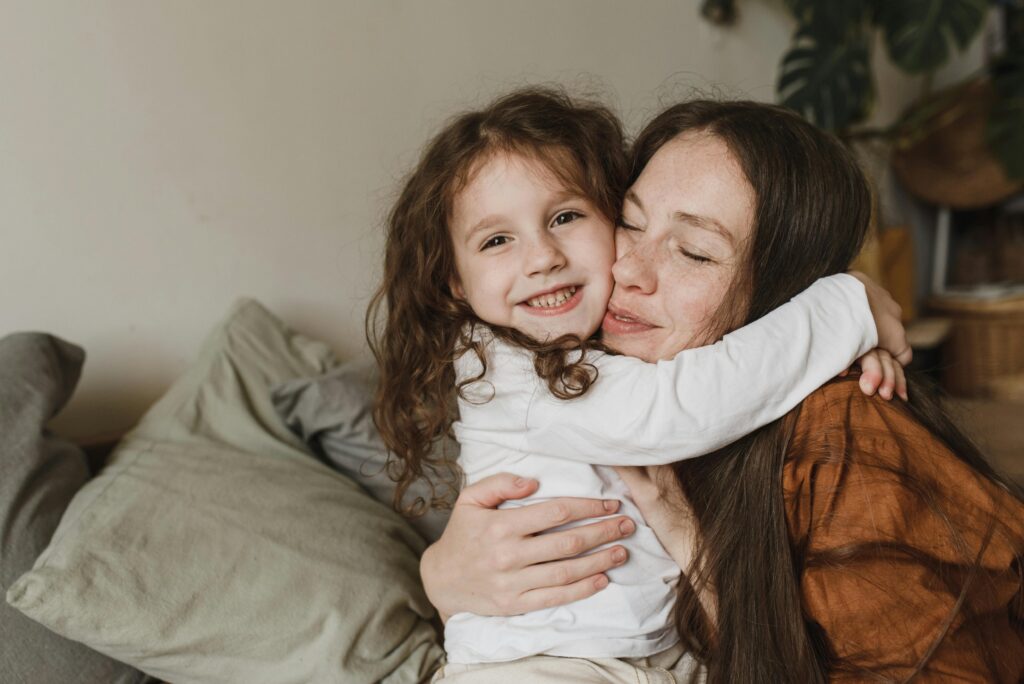
What Is Happening in Your Child's Nervous System After a Full School Day
Your child's brain is not finished developing. That is not a metaphor.
The prefrontal cortex, the part responsible for emotional regulation, impulse control, and rational thinking, is not fully developed until the mid twenties. Your eight year old is not choosing to melt down. Their brain literally does not yet have the full capacity to manage big feelings without support.
Add to that the physical reality of a school day. Six or more hours of sensory input. Noise, lights, movement, social dynamics, concentration demands. For many kids, especially sensitive or introverted children, a full school day is the equivalent of running a half marathon while also managing several ongoing diplomatic negotiations.
By the time they get home, their regulatory resources are spent. There is nothing left in the tank for coping. The smallest trigger, the wrong cup, the snack that is not what they wanted, the sibling who breathes near them, tips the whole system over.
This is called getting home dysregulation, and it is one of the most commonly reported challenges for parents of school aged children. You are not doing anything wrong. Your child is not broken. Their nervous system is just full, and it is looking for somewhere to empty.
Why 3:30pm Is the Hardest Hour in Your House
The timing is not a coincidence.
Most kids arrive home at the end of their cortisol curve. Cortisol, the stress hormone, peaks in the morning and gradually drops throughout the day. By mid afternoon, energy, focus, and emotional resilience are all at their lowest point of the day. This is true for adults too, which is why you are also at your most frazzled when they come through the door.
Two people with depleted nervous systems, meeting in a small kitchen. Someone is going to crack.
There is also something called the "after school restraint collapse," and it is a real documented phenomenon. Children who manage their behaviour beautifully at school, who teachers describe as wonderful and cooperative, come home and completely fall apart. Because the mask comes off. Because home is safe. Because you are safe.
Understanding this does not make the 3:30pm hour calm. But it does mean you can stop wondering what you are doing wrong. You are doing nothing wrong. You are just the lucky person they trust most in the world. 😅
What Your Child Needs Before They Can Begin to Calm Down
Before any strategy works, before any conversation can happen, before any problem gets solved, your child needs one thing.
They need to feel felt.
Not fixed. Not redirected. Not told to calm down. Felt.
When a child is dysregulated, the emotional part of their brain is completely in charge. Logic, reasoning, instruction, none of that can reach them while they are in that state. You cannot talk a child out of big feelings until those feelings have been acknowledged.
This looks like sitting near them without talking. It looks like saying "that was really hard today, wasn't it." It looks like a hand on the shoulder if they want it, or just presence if they do not. It looks like not trying to solve anything for the first few minutes.
My daughter went through a period where she would walk in the door and just need to sit next to me on the sofa for ten minutes without talking. Not because anything was wrong. Just because she needed to refill. She needed to feel that she was home and that I was there and that nothing was required of her.
Those ten minutes cost me nothing and they changed the whole rest of the evening. Without them, the dysregulation would just ripple forward into dinner and bath time and bedtime and we would all end the day frayed.
The refill comes first. Everything else comes after.

The Things That Make Big Feelings After School Worse (Even the Ones That Feel Helpful)
Some of the things we instinctively reach for actually extend the dysregulation rather than shortening it. Not because we are doing it wrong. Because no one told us how this actually works.
Asking too many questions too soon. "How was your day?" "What did you do?" "Did anything happen?" It feels connecting. To a dysregulated child, it feels like more demands. Save the questions for after the snack and the decompression window.
Jumping straight into problem solving. "Let's talk about what happened." "Next time you could try…" Your child's brain cannot access the reasoning part while it is still flooded. You are talking to a wall, and they feel unheard even though you are trying to help.
Matching their energy. When they escalate, we often escalate with them. Volume meeting volume creates chaos, not calm. Lowering your own voice, slowing your own movements, is one of the most powerful co regulation tools you have. Your nervous system can help regulate theirs, but only if yours is steadier.
Making them feel guilty for the feelings. "I had a hard day too, you know." True. Also not useful in this moment. They already feel out of control. Adding shame makes it worse and longer.
Filling the silence. Sometimes the most helpful thing you can do is nothing. Just be there. Quiet. Available. Not performing comfort, just providing it.
What to Actually Do When It All Explodes at the Front Door
This is not a twelve step system. This is three things that work.
First: Lower your own nervous system before you engage theirs. Take one slow breath before you respond. Not because you need to meditate. Because your calm is genuinely contagious, and their panic is too. Choose which one you want to spread.
Second: Give them a landing pad before you give them anything else. A snack waiting on the table. Ten minutes of no demands. A hug if they want it, space if they do not. Let the arrival just be the arrival before it has to be anything else. Some families call this a "decompress first" rule. The first fifteen minutes after school are just for landing. No chores, no homework conversations, no "tell me about your day."
Third: Name what you see, not what you want them to do. Instead of "please calm down," try "you had a really big day and your body is full right now." Instead of "stop crying," try "I can see you are really upset. I am right here." This is not magic. It does not always stop the meltdown instantly. But it shortens it. And over time, it teaches them to name their own feelings, which is the whole point.
If you find yourself regularly getting pulled into the explosion with them, if their dysregulation is triggering yours and you are ending up in shouting matches that you feel terrible about later, that is not a parenting failure. That is two nervous systems colliding without a buffer. And the buffer has to start with you.
The Snap Switch is a simple three step method I use for exactly that moment, when I can feel myself about to go over the edge with them. It is free and it takes about two minutes to learn. If the after school window is regularly tipping you into reactions you regret, it is worth having in your back pocket.
How to Protect Your Own Nervous System Through It All
This part does not get talked about enough.
Your child's after school big feelings are not just hard because they are loud or inconvenient. They are hard because they arrive at the exact moment you are most depleted. You have been working, or managing the house, or thinking, or doing invisible things all day. You are also at your 3:30pm low. And then the emotional tornado comes home.
You are not a machine. You are a human being with your own nervous system and your own limits.
A few things that actually help:
Give yourself a five minute warning before pickup or before they arrive home. Not to prepare a strategy. Just to put your phone down, take a breath, and shift out of whatever you were doing into being present. The transition is hard for kids. It is also hard for you.
Lower your expectations for the first twenty minutes. If you go into the after school window expecting calm and cooperation, you will be disappointed every time. If you go in expecting noise and feelings and chaos, and anything calmer than that is a bonus, you will feel significantly less defeated.
Let yourself be imperfect at this. You will sometimes match their energy. You will sometimes say the wrong thing. You will sometimes close yourself in the bathroom for sixty seconds because you need a wall between you and the noise. That is not failure. That is being human.
The goal is not to be a serene unshakeable presence every single afternoon. The goal is to be good enough, most of the time. That is what they need. That is what you can actually give.

What Happens Over Time When You Keep Showing Up
Here is the long game, and it is worth knowing about.
Every time you hold the space for your child's big feelings after school, without shaming them, without trying to fix them too fast, without falling apart yourself, you are doing something quietly powerful. You are teaching their nervous system that big feelings are survivable.
That they do not have to be afraid of their own emotions.
That they have somewhere safe to land.
This does not happen in a single afternoon. It happens in the accumulation of ordinary 3:30pm moments, most of which will not feel significant when they happen. The snack on the table. The quiet ten minutes. The time you bit your tongue and just sat there instead of explaining why the cup was fine actually.
My daughter still cries sometimes when things feel big. She is eleven now and she still needs a landing pad when she comes in the door on hard days. And I am still not always perfectly calm when she does. But I know what she needs, and she knows I will try to give it to her.
That is enough. That has always been enough. 💛
One Comment
This is a great article! Super helpful for stressed out parents 😊