
“Why am I so tired even after sleeping?”
I remember asking that in my head while staring at the ceiling, already counting the things I needed to remember the next day. If that thought keeps looping for you too, you’re not imagining things.
A lot of moms live under constant, low-grade stress that never really shuts off. The mental load, the emotional labor, the always-being-on. Research backs it up, but honestly, most of us don’t need a study to confirm it. Mom burnout isn’t about doing something wrong. It’s what happens when care keeps flowing out and very little flows back in.
This guide isn’t here to tell you to try harder or think more positively. I want to name what mom burnout actually feels like, why it sneaks up so quietly, and what real recovery can look like when your life is already full. No pressure to fix yourself. No performative self-care. Just practical, compassionate clarity you can breathe inside.
Feel Lighter in Minutes, Even on the Heaviest Days
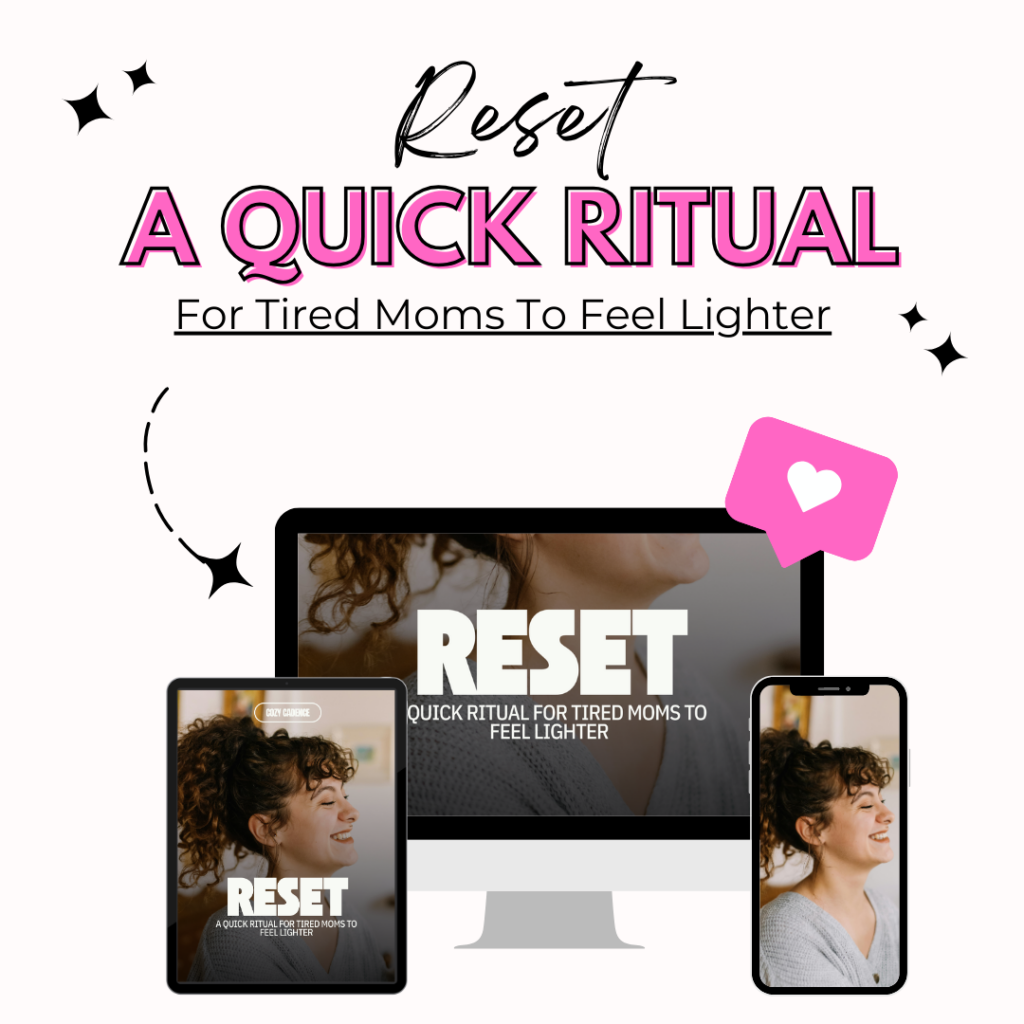
RESET is a simple calming ritual that helps tired moms unload mental overwhelm, regulate their nervous system, and return to the day with clarity and steadiness.What Is Mom Burnout?
Why does rest stop working? Why does a full night of sleep still leave you wiped out before noon? That question haunted me for a long time, because I kept telling myself I was just tired. Turns out, mom burnout isn’t normal tiredness at all.
Normal exhaustion usually has a fix. You sleep, you rest, maybe you get a quiet morning and things feel a little better. Mom burnout sticks around. It’s emotional, mental, and physical all tangled together, and no amount of “just relax” touches it. I learned this the hard way after taking a weekend off and coming back feeling… the same. Maybe worse.
Here’s how I finally understood the difference:
- Stress is short-term pressure. It spikes, then settles.
- Exhaustion is your body asking for rest.
- Burnout is what happens when those requests get ignored for too long.
Burnout shows up as brain fog, irritability, numbness, and that low-key resentment you feel bad admitting. Your nervous system stays switched on, even when nothing urgent is happening. Chronic stress does that. It compounds quietly, stacking unfinished emotional loops and constant responsibility until your system just can’t reset anymore.
What made this confusing for me was functioning. I was still doing the things. Meals, school stuff, appointments. High-functioning burnout is sneaky like that. You look fine, but inside you feel hollow and stretched thin.
Mom burnout isn’t weakness. It’s your body and mind saying, something here is unsustainable. Once I stopped calling it “just being tired,” recovery finally started to make sense.

Common Signs and Symptoms of Mom Burnout
Is it normal to feel irritated by everything and nothing at the same time? Or to feel weirdly flat, like the volume on your emotions got turned down without asking you first. I remember snapping over tiny stuff and then feeling nothing right after, which somehow felt worse. That emotional whiplash is often one of the first signs of mom burnout.
Mentally, things get fuzzy. Brain fog makes simple decisions feel heavy, like choosing dinner requires a full committee meeting in your head. Decision fatigue creeps in fast when you’re carrying the mental load all day, and overwhelm becomes the default setting. I’d reread the same message three times and still forget to reply. That’s not laziness, it’s burnout.
The physical symptoms surprised me the most. Headaches that came out of nowhere, trouble falling asleep even when exhausted, and a kind of bone-deep fatigue that didn’t match how much I’d done that day. Chronic stress lives in the body, and eventually it makes itself impossible to ignore.
Behavior changes were the giveaway, looking back. Pulling away from people, scrolling my phone way longer than I meant to, snapping at the people I love and then apologizing on repeat. It felt like self-control just leaked out of me.
The hardest part? I dismissed all of it for way too long. A lot of moms do. We tell ourselves everyone feels this way, or that we should be able to handle it. When mom burnout is normalized, the warning signs get brushed off instead of listened to.
What Causes Mom Burnout
Why does it feel like your brain never shuts off, even when your body finally hits the couch? For me, it wasn’t the big tasks that caused burnout. It was the invisible mental load. Remembering appointments, tracking who needs what, anticipating everyone else’s emotions. That constant responsibility runs in the background all day, and it’s exhausting in a way sleep doesn’t fix.
Rest was another trap. I technically rested, but nothing about it restored me. Scrolling, zoning out, collapsing at the end of the day. That’s not real rest, that’s recovery mode without recovery. When your nervous system never feels safe enough to power down, burnout keeps growing quietly.
Emotional labor played a huge role too. Being the one who notices moods, smooths conflicts, and holds space for everyone else takes energy. Caregiving without relief slowly drains you, especially when there’s no off switch and no one tagging you out. It’s a lot, even when you love your family deeply.
Then there’s the pressure. Be patient, present, productive, grateful, and somehow calm. Cultural expectations tell moms to do it all without complaint, and internalized guilt makes asking for less feel selfish. I kept thinking, other people handle this, so why can’t I?
That’s why “doing less” feels impossible. The systems around us still expect the same output, even when we’re running on empty. Mom burnout isn’t caused by weakness. It’s caused by too much, for too long, without enough support.

Why Mom Burnout Is So Often Ignored or Normalized
Why does it feel almost embarrassing to admit you’re struggling, even when you’re clearly exhausted? I bought into the idea that burnout was just part of motherhood. Like, of course you’re tired, you’re a mom. That belief kept me quiet way longer than it should have.
Comparison culture doesn’t help. You see other moms “doing it all” and assume they’re handling it better. What you don’t see is what’s happening off camera. That constant comparing silences real struggle and makes burnout feel like a personal failure instead of a predictable response to chronic stress. I remember thinking, if they can manage, I should be able to too.
High-functioning moms get missed the most. You’re still showing up, checking boxes, keeping things running. From the outside, everything looks fine. Inside, though, you’re running on fumes. Because you’re functioning, no one asks if you’re okay. Sometimes, you don’t ask yourself either.
Pushing through becomes the default. You tell yourself you’ll rest later, after this season, after this week. The problem is later keeps moving. Pausing feels unsafe when everything depends on you, so burnout deepens instead of easing.
When mom burnout is normalized, recovery gets delayed. The warning signs are brushed off as “just how it is,” and by the time help feels justified, you’re already depleted. Naming burnout for what it is can be the first real step toward healing.
The Impact of Mom Burnout on Mental Health and Family Life
Why does everything feel heavier when you’re burned out, even the moments that used to bring joy? I noticed my anxiety creeping up first. Small things felt urgent, my thoughts raced at night, and low moods lingered longer than they should have. Burnout and mental health are tightly linked, and ignoring one almost always makes the other worse.
What hurt the most was how it changed my patience and presence. I was physically there, but mentally checked out. Conversations felt rushed, connection felt forced, and my fuse got shorter. Burnout pulls you out of the moment, even when you desperately want to stay connected to your family.
Then came the guilt. Snapping, withdrawing, needing space, and then beating myself up for it. That cycle of self-blame is brutal. You feel burned out, feel bad for feeling burned out, and then push harder to compensate. It’s exhausting, and it keeps the burnout loop going.
Addressing mom burnout doesn’t just help you. It shifts the whole family dynamic. When you have more emotional bandwidth, there’s more patience, more calm, and more room for real connection. Kids feel it. Partners feel it. The house feels different.
When burnout goes untreated long-term, it can lead to anxiety disorders, depression, chronic health issues, and deep resentment. That’s not a scare tactic, it’s what happens when stress never gets resolved. Taking burnout seriously is a form of care for everyone, not just you.

How to Recover From Mom Burnout (Realistic, Gentle Steps)
How do you recover when you’re already exhausted and the idea of “doing one more thing” makes you want to cry? That was my biggest block. I kept looking for a plan, when what I actually needed was permission. Recovery from mom burnout doesn’t start with productivity. It starts when you allow yourself to admit that something isn’t working.
One of the most helpful shifts for me was learning how to let go of borrowed expectations. All the quiet shoulds I picked up from other people, from culture, from versions of motherhood that were never designed for my life. I realized I kept asking, what should a good mom do, instead of what’s actually sustainable for me right now?
That’s what led me to create Invisible Yeses. It’s a place to put down the weight you’re carrying just because you think you’re supposed to. The unseen agreements, the emotional responsibilities you never consciously chose. Writing them out helped me see how much energy was going toward things that weren’t truly mine. Letting go didn’t make me less caring. It made room to care without burning out.
Instead of big self-care routines, I focused on micro-rest. Tiny pauses that didn’t require planning or guilt. Things like sitting in silence for two minutes, closing my eyes before switching tasks, or stepping outside without my phone. It sounds small, but those moments told my nervous system it was safe to soften.
Reducing mental load mattered more than adding habits. I wrote things down, simplified decisions, and stopped holding information that didn’t need to live in my head. Fewer open loops meant less background stress.
Creating emotional safety for myself was huge. That meant noticing when I was pushing too hard and choosing compassion instead. Recovery isn’t linear. Some days feel lighter, others don’t. That doesn’t mean you’re failing. It means you’re healing in a real, human way.
Preventing Mom Burnout Moving Forward
How do you make sure you don’t end up back in the same burned-out place again? That question mattered to me more than quick fixes. I started by paying attention to early warning signs. Irritability, tight shoulders, that urge to withdraw. Catching burnout early is way easier than climbing out once you’re depleted.
Rigid routines were part of my problem. They looked good on paper but left no room for real life. What worked better were rhythms. Loose patterns that could flex depending on the day. Mornings had a flow, not a schedule. That alone reduced a lot of pressure.
Sharing the mental load had to become visible. Not just asking for help, but actually naming what I was carrying. Lists helped. Conversations helped. Letting go of control helped, even when things weren’t done my way. Burnout thrives in silence.
Boundaries were uncomfortable at first. Saying no without explaining myself felt wrong, almost rude. But over time, I learned that boundaries protect energy, not feelings. I didn’t owe a full backstory for needing rest or space.
Creating margin was about small choices. Fewer commitments, slower transitions, leaving white space in the day. And redefining what “enough” means was the biggest shift of all. Enough isn’t perfection. It’s sustainability. If it lets you show up without losing yourself, it counts.

Conclusion
Mom burnout isn’t a flaw in you. It’s information. A signal that something in your life has been asking for care for a long time, and finally got loud enough to be heard. Nothing about this means you’re weak or failing at motherhood.
Recovery doesn’t ask you to reinvent yourself or become calmer, better, or more grateful. It asks you to listen. To soften the pressure where you can. To stop treating exhaustion like a character issue and start treating it like a real need. Choosing support over silence can feel scary, but it’s often the most stabilizing step.
If this article hit close to home, you don’t need to turn it into another to-do list. You might simply need a place where you can choose what supports you right now. I’ve gathered all of my tools, guides, and gentle resources in one spot, so you can meet yourself where you are and take only what feels helpful. Even one small release, one quiet yes to support, can be the beginning of real relief.
I’m not a doctor or mental health professional. The reflections and tools shared here are based on lived experience and education, not medical advice. If you’re experiencing severe burnout symptoms, ongoing depression, anxiety, or thoughts of harming yourself or others, please reach out to a qualified healthcare provider or mental health professional. You deserve real, personal support.
Feel Lighter in Minutes, Even on the Heaviest Days
RESET is a simple calming ritual that helps tired moms unload mental overwhelm, regulate their nervous system, and return to the day with clarity and steadiness.